EN
EN

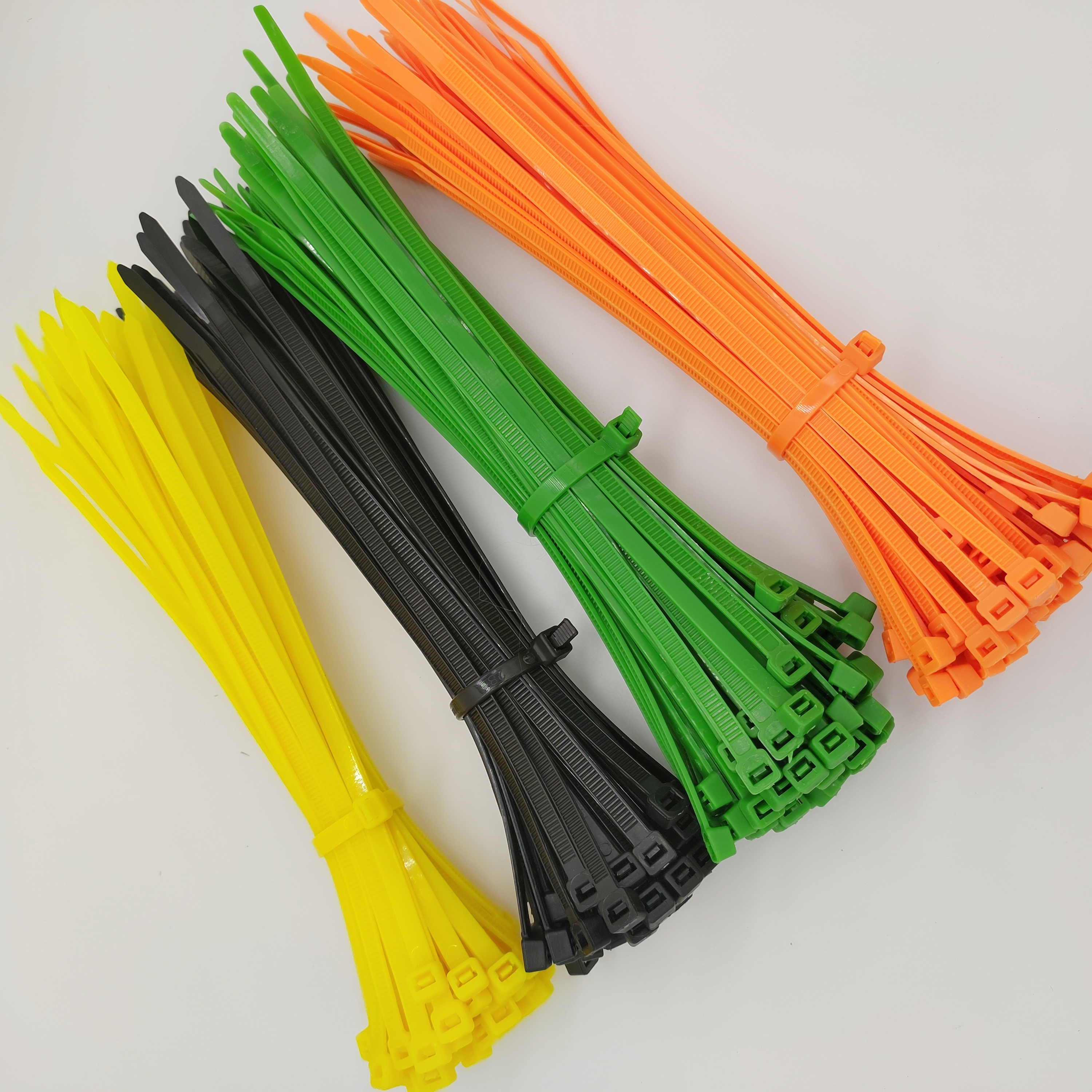
Why Color-Coded Nylon Cable Ties Improve Efficiency and Reduce Errors
Visual Cognition Accelerates Identification by Up to 68%
The human brain processes color 60,000 times faster than text—turning cable identification from a search task into instant pattern recognition. Research shows this visual cognition slashes identification time by up to 68% compared to monochrome ties (Industrial Psychology Review, 2023). When technicians see red ties on critical power lines or blue on data networks, they bypass schematic cross-referencing entirely. This cognitive shortcut is especially vital during emergency repairs in data centers, where every minute of downtime costs $9,000 (ITIC 2023 Global Report). Color differentiation also reduces mental fatigue by minimizing decision steps, cutting troubleshooting errors by 41% in high-density installations.
Dual-Coding Theory: How Color + Labeling Enhances Recall and Prevents Misrouting
Dual-coding theory confirms that pairing visual cues with verbal labels creates redundant mental pathways—boosting recall accuracy by 57% in operational settings. When color-coded nylon cable ties feature engraved identifiers like “HVAC” or “BACKUP,” technicians engage two memory channels simultaneously: color triggers categorical recognition, while text confirms function. This synergy eliminates misrouting risks—a critical safeguard when mistakenly connecting 480V lines to low-voltage sensors could cause $500k in equipment damage. Facilities using this dual-layer approach report 73% fewer cable-related incidents, as color-text alignment provides fail-safe validation even under low-light conditions or time pressure.
Material Benefits of Nylon in Color-Coded Cable Ties
UV-Stabilized Nylon 6/6 Ensures Long-Term Color Fidelity
Color-coded nylon cable ties maintain reliable visual identification only when engineered for durability. Standard nylon 6/6 degrades under ultraviolet exposure, causing fading that compromises organization—especially in outdoor applications. UV-stabilized formulations incorporate carbon black additives to absorb radiation, extending outdoor service life to 5+ years while preserving ≥90% color integrity. In contrast, unstabilized ties lose chromatic distinction within 12–18 months in direct sunlight, risking misidentification in telecom, utility, solar farm, and traffic control systems where accurate coding directly impacts safety and uptime.
Tensile Strength, Flame Retardancy, and Chemical Resistance for Mission-Critical Use
Nylon 6/6 delivers the mechanical and environmental resilience required for high-stakes infrastructure. Its crystalline structure supports tensile strengths up to 12,000 PSI—securing heavy cable bundles in aerospace, energy, and industrial machinery. Flame-retardant variants meet UL94 V-2 standards, self-extinguishing within 10 seconds to prevent fire propagation in electrical panels and data center power distribution. Broad chemical resistance protects against oils, solvents, fuels, and pH 3–11 exposure—making it suitable for petrochemical, automotive, and manufacturing environments.
| Property | Performance Benefit | Critical Application |
|---|---|---|
| Tensile Strength | Secures 250+ lb loads without fracture | Industrial machinery wiring |
| Flame Retardancy | Self-extinguishes within 10 seconds | Data center power distribution |
| Chemical Resistance | Withstands pH 3-11 exposure | Petrochemical installations |
These properties ensure color-coded nylon cable ties retain both structural integrity and visual fidelity across extreme temperature ranges (–40°C to 85°C)—a necessity for mission-critical infrastructure.
Standardized Color-Coding Schemes for Reliable Organization
ANSI/TIA-606-C and ISO/IEC 11801 Guidelines for Data, Power, and Safety Circuits
Industry standards such as ANSI/TIA-606-C and ISO/IEC 11801 provide universal, function-based color protocols—eliminating guesswork and reducing wiring errors by 53% versus ad-hoc schemes (Electrical Safety Report, 2023). These frameworks assign consistent hues: blue for data networks, red for critical safety circuits, yellow for AC power, and green for grounding per U.S. practice. Crucially, they mandate labeling redundancy—requiring engraved identifiers alongside color—to enforce dual-layer recognition in high-density or time-sensitive environments.
Common Pitfalls: Inconsistent Logic, Undocumented Schemes, and Regional Compliance Gaps
Three systemic issues routinely undermine color-coding effectiveness:
- Inconsistent logic: Using orange for fiber optics in one facility but security cables in another
- Undocumented schemes: Lacking accessible, version-controlled master registries for all technicians
- Regional disparities: Overlooking that EN 50173 (EU) reserves green for grounding, while some legacy U.S. sites use it for video
Such gaps cause cross-functional misinterpretation, increasing rework costs by $740k annually per facility (Ponemon Institute, 2023). Mitigation requires centralized documentation aligned with local regulations—and quarterly audits. Phased implementation of standardized color-coded nylon cable tie systems prevents audit failures while cutting troubleshooting time by 68%.
Practical Deployment of Color-Coded Nylon Cable Ties Across Industries
Data Center, Electrical, and Industrial Applications: Real-World Best Practices
Top-tier operators deploy color-coded nylon cable ties using standardized, application-specific logic:
- Data Centers: Blue for data, orange for fiber, red for security-critical circuits, and yellow for backup power—aligned with ANSI/TIA-606-C.
- Electrical Panels: Black/red/blue for phase conductors and green for grounding—supporting NEC compliance and preventing cross-connection faults.
-
Industrial Machinery: Purple for hydraulic lines, gray for sensor cables, and yellow for emergency stop circuits—enabling rapid maintenance.
Best practices include specifying UV-stabilized ties for outdoor use and flame-retardant nylon 6/6 near high-heat equipment. Facilities following these guidelines report a 40% reduction in troubleshooting time during manufacturing audits.
Phased Implementation Strategy for Scalable, Audit-Ready Organization
Adopt color-coded systems through a disciplined, three-phase rollout:
- Assessment: Audit existing circuits and map them to ISO/IEC 11801 or ANSI/TIA-606-C logic (e.g., yellow for safety systems, blue for data).
- Pilot Zone: Deploy ties in high-priority areas—such as server racks or control panels—and train staff on the scheme and its rationale.
-
Full Rollout: Expand system-wide using audit-compliant documentation; reserve 15% of ties for emergency re-tagging and future expansion.
Maintain consistency by storing color guides digitally, enforcing supplier uniformity across batches, and integrating color logic into CMMS and BIM workflows.
FAQ
Why are color-coded nylon cable ties so effective?
Color-coded nylon cable ties improve efficiency by enabling instant visual recognition, reducing errors during troubleshooting, and cutting down on search times through mental shortcuts like color cognition and dual-coding.
What materials are used in durable color-coded cable ties?
UV-stabilized nylon 6/6 is the primary material, offering long-term color fidelity, tensile strength, flame retardancy, and chemical resistance for high-stakes environments.
How do industry standards improve cable management?
Standards like ANSI/TIA-606-C and ISO/IEC 11801 assign universal color codes and enforce labeling redundancy, minimizing wiring errors and increasing organization consistency.
What challenges exist with inconsistent color schemes?
Inconsistent logic, undocumented schemes, and regional compliance gaps can lead to misinterpretation, higher rework costs, and safety risks. Proper documentation and standardized approaches mitigate these issues.
How can facilities implement color-coded nylon cable ties effectively?
A phased rollout—first assessing circuits, piloting zones, and gradually implementing facility-wide—ensures scalable and audit-ready deployment, reducing troubleshooting times significantly.