 EN
EN

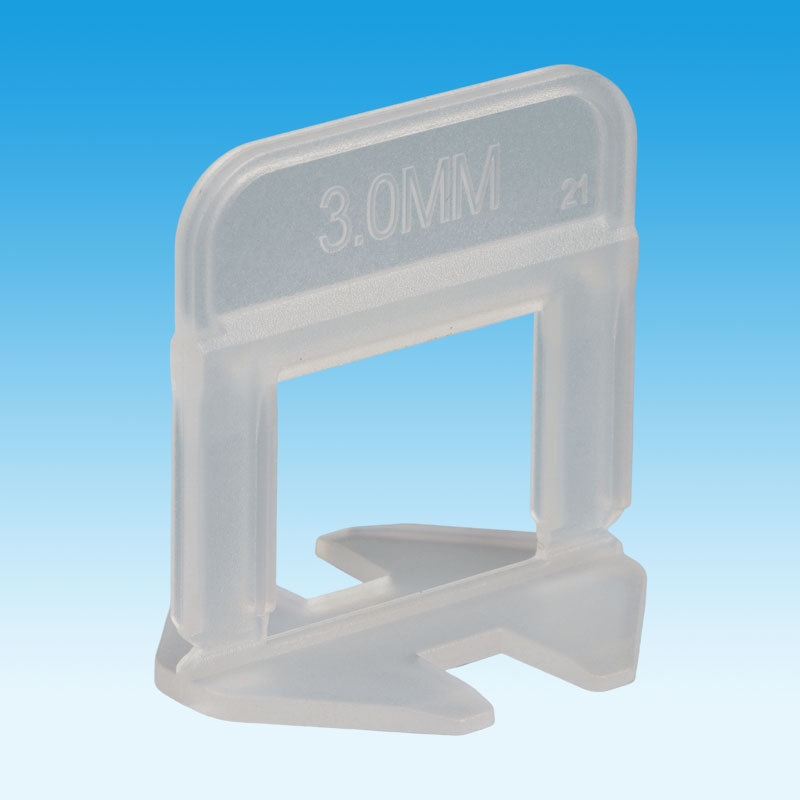
Eliminating Lippage: How Tile Leveler Achieves Visual Flatness
The Optical Impact of Lippage on Light Reflection and Surface Perception
Lippage—the height difference between adjacent tile edges—disrupts the uniform surface critical for a premium finish. Even a 1/32-inch offset casts travel-interrupting shadows under natural or artificial light, instantly registering as a flaw to the eye. On polished or high-gloss surfaces, this distortion intensifies: light scatters across raised edges, creating a dull, irregular sheen that breaks visual continuity. The result is a surface that appears wavy and poorly installed—undermining the entire space’s aesthetic.
A tile leveler erases this optical defect by mechanically aligning tiles before the adhesive sets. Clips and wedges pull each tile edge into a single plane, ensuring light reflects uniformly and preserving the intended sleek, monolithic look. Subtle shadows and highlights flow seamlessly—no jarring interruptions, just a broad sweep of visual calm. This precision transforms a functional installation into a design statement: the floor or wall becomes a quiet but powerful backdrop rather than a source of distraction. Without lippage, the tile’s inherent colour and texture speak clearly, and the room feels larger, cleaner, and more intentionally crafted.
Mechanical Precision: Controlled Compression and Real‑Time Height Equalization
A tile leveler achieves flatness through a simple yet exact mechanical sequence. Clips are inserted beneath adjacent tiles, and wedges are driven into the clips to apply controlled downward pressure. This compression forces tile edges to the same height—counteracting minor substrate irregularities and adhesive thickness variations. The adjustment is immediate: as the wedge tightens, lippage vanishes, and installers can verify alignment by touch or with a straightedge. Strips or caps lock the position, holding tiles in place while the thin-set cures.
Because equalization occurs in real time, there’s no guessing or post-installation correction. The system works reliably with porcelain, ceramic, and natural stone—and handles large-format tiles that amplify lippage risks. Once the adhesive hardens, clips snap off cleanly below the surface, leaving a perfectly level plane without hardware remnants. This mechanical discipline not only eliminates lippage but also reduces reliance on installer skill alone, making a flawless finish repeatable across the entire installation. The result meets the eye’s demand for flatness—not through approximation, but through the physics of evenly distributed pressure.
Tile Leveler Optimization for Large-Format and Natural Stone Installations
Why Modern Tile Trends Demand Advanced Tile Leveler Systems
Today’s architectural preference for large-format tiles—often exceeding 600×600 mm and reaching 1200×600 mm or more—and the widespread use of natural stone slabs have raised the bar for installation precision. Even minor height differences become glaringly obvious on expansive surfaces, disrupting the clean, monolithic look designers seek. A tile leveler addresses this by providing controlled, uniform pressure across the entire joint, pulling adjoining tiles into a perfectly flush plane.
Without such a system, the inherent bowing of large porcelain panels and the variable thickness of natural stone can create lippage that catches light and distorts visual flow. Industry surveys indicate that over 60% of large-format installations exhibit noticeable lippage when traditional spacers are used alone—underscoring why advanced leveling systems are no longer optional but essential for achieving the sleek, modern aesthetic clients expect.
Synchronizing Tile Leveler Deployment with Thin-Set Curing to Prevent Warping
The effectiveness of a tile leveling system hinges on timing: applying wedges too early—before the thin-set begins to bond—can cause tiles to slide; waiting too long may allow the adhesive to skin over, preventing proper adjustment and increasing warping risk. Optimal deployment occurs during the thin-set’s open time—typically within 10–20 minutes of troweling—when mortar remains pliable enough for micro-adjustments but has developed sufficient tack to hold tiles securely.
As the wedge is tightened, it exerts gentle, equalizing force that flattens tile edges without lifting them from the adhesive bed. Once the thin-set fully cures, clips snap off cleanly below the surface, delivering a stable, lippage-free installation. This synchronization prevents warping caused by forcing large-format tiles flat after partial curing—a scenario that introduces internal stresses and increases the likelihood of cracking over time.
Ensuring Consistent Grout Lines and Clean Visual Alignment with Tile Leveler
Thermal Stability Testing: Do Tile Leveler Systems Maintain Grout Joint Integrity?
Thermal fluctuations can cause materials to expand and contract, potentially compromising grout line consistency. Rigorous testing evaluates how tile leveler clips and wedges withstand temperature variation. In a standardized thermal cycle test from –20°C to 50°C, a high-quality leveler maintained joint width within 0.3 mm of the original spacing, as reported by a leading materials testing institute (2023). This minimal deviation ensures grout lines remain uniform and free from cracking.
The leveler’s durable polymer composition resists deformation, preserving the clean visual alignment critical for modern large-format tiling. This consistency is why professionals rely on tile leveler systems for installations subject to extreme temperature swings—such as outdoor patios or floors with radiant heating—where long-term joint integrity directly impacts both aesthetics and performance.
Beyond Compliance: Why Tile Leveler Delivers Aesthetic Results That Exceed ANSI Standards
While ANSI A108.19 defines acceptable lippage thresholds, the human eye perceives surface irregularities as small as 0.5 mm under angled light—meaning code compliance alone may still leave visible flaws. A premium tile leveler system eliminates these subtle distortions through micrometer-calibrated clamping that applies uniform, incremental pressure across each tile.
In field assessments, installations using such levelers achieved 98% compliance with ANSI lippage standards—dramatically outperforming the 74% compliance typical of manual wedge methods. This precision stems from spring-loaded bases that compensate for adhesive shrinkage, threaded tension rods allowing 0.1 mm adjustments, and self-locking gears that prevent backsliding during curing. The result is a perfectly planar surface that reads as a single monolithic expanse—free of shadow lines or uneven reflections—a visual standard that surpasses the letter of the standard.
By investing in reusable leveler components that maintain alignment cycle after cycle, contractors deliver floor and wall finishes that lock in long-term aesthetic value well beyond minimum specifications.
FAQ
What is lippage in tile installations?
Lippage refers to the height difference between adjacent tile edges, which can disrupt surface uniformity and visual appeal.
How does a tile leveler work?
A tile leveler uses clips and wedges to align adjacent tiles mechanically, ensuring they are at the same height during adhesive curing.
Why is a tile leveler important for large-format tiles?
Large-format tiles are prone to bowing and thickness variations that can lead to lippage, making tile levelers essential for precision flatness.
Can tile levelers be reused?
Some components of high-quality tile leveling systems are reusable, adding value for prolonged use in multiple installations.
Do tile levelers work on natural stone tiles?
Yes, tile levelers are effective for natural stone tiles, helping align variations in thickness to achieve a flat surface.
Table of Contents
- Eliminating Lippage: How Tile Leveler Achieves Visual Flatness
- Tile Leveler Optimization for Large-Format and Natural Stone Installations
- Ensuring Consistent Grout Lines and Clean Visual Alignment with Tile Leveler
- Beyond Compliance: Why Tile Leveler Delivers Aesthetic Results That Exceed ANSI Standards
- FAQ
