 EN
EN


How Cable Joint Ensures Safe Power Supply
A cable joint is a load-bearing node in any electrical installation, not a finishing touch. When a cable joint fails, the consequences range from nuisance tripping to arc faults, equipment damage, and in some environments, a genuine fire or electrocution risk. Having reviewed electrical installation specifications across industrial and commercial projects, I can say that cable joint selection is the step where safety gaps are most consistently introduced. Usually not because of bad components, but because the wrong component was chosen for the environment.
This article walks through the specific mechanisms by which a properly selected cable joint maintains safe power supply, and what happens when those mechanisms are absent or compromised.
The Root Cause: What Makes a Cable Connection Unsafe
Most electrical faults at cable connection points trace back to four failure modes. Understanding them is the starting point for understanding what a cable joint actually needs to do.
- Moisture ingress: Water entering a connection point degrades insulation resistance over time. In outdoor or high-humidity environments, this is a leading cause of intermittent faults and insulation breakdown.
- Poor mechanical hold: A cable that can be pulled or vibrated loose from its joint creates intermittent contact, leading to arcing, heat generation, and eventual failure.
- Insulation gap at the entry point: If the transition between cable sheath and enclosure is not sealed and protected, the conductor insulation can be abraded or pinched, creating a fault path directly at the cable joint.
- Thermal cycling stress: Conductors expand and contract with load cycling. A cable joint that does not grip the cable mechanically transmits this movement directly to the connection terminal, loosening it over time.
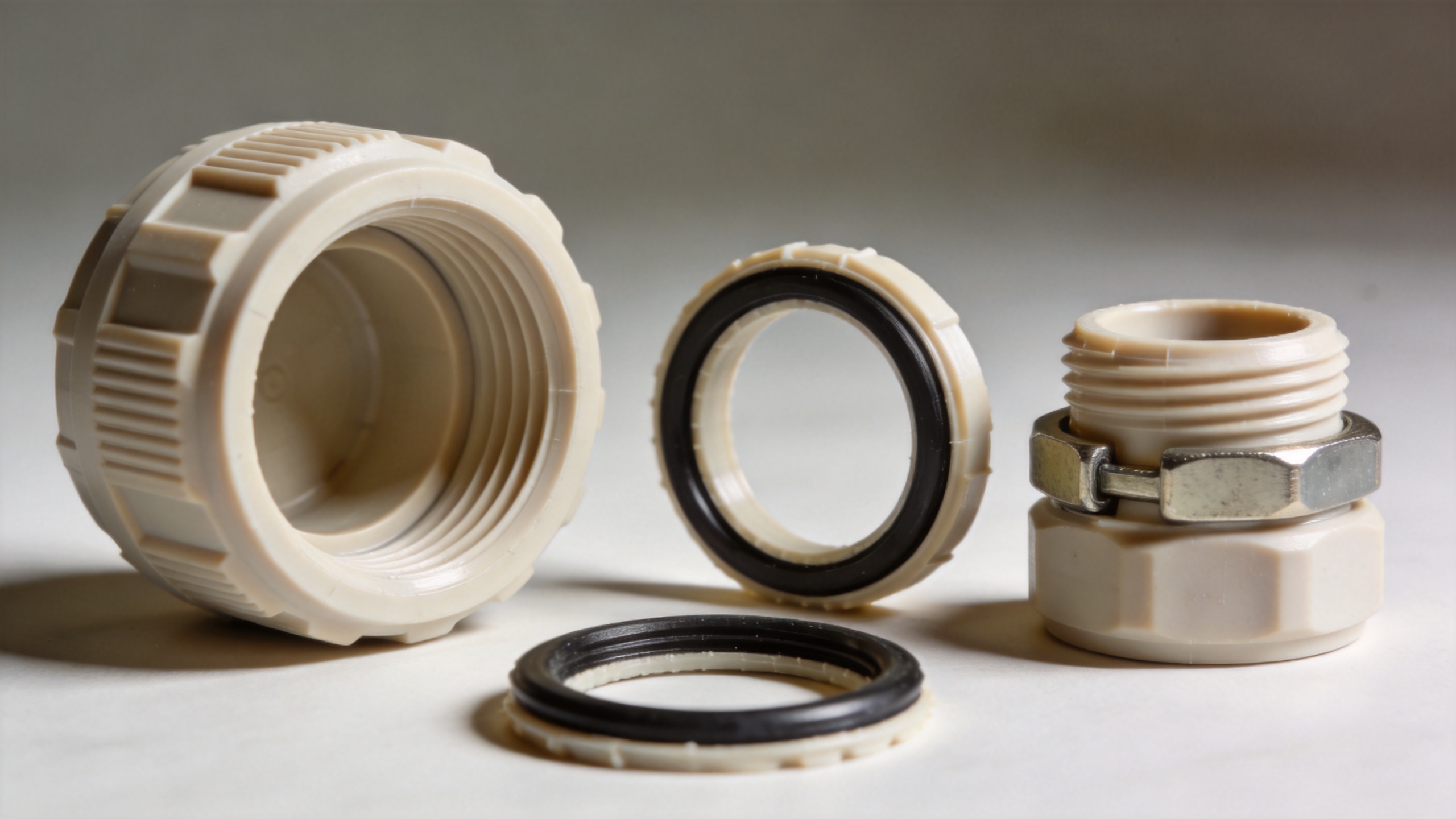
These four failure modes are not theoretical. They are the recurring patterns in connection failures across electrical installations. A cable joint addresses each one through its structural design, assuming it is the right cable joint for the application.
How a Cable Joint Maintains Safe Power Supply
Sealing: The First Line of Defense
The sealing function of a cable joint is what separates an outdoor-rated connection from an indoor one. IP (Ingress Protection) rating is the primary technical specification buyers use to evaluate cable joints, and with good reason. An IP67-rated cable joint is dust-tight and can withstand temporary immersion in water; IP68 extends this to prolonged or continuous immersion. For junction boxes in outdoor lighting, ground-level industrial installations, or marine environments, the difference between IP65 and IP68 is not a specification footnote. It marks the boundary between a safe installation and a recurring maintenance problem.
IEC 62444 sets the construction, performance, and testing requirements for cable gland connectors, including dimensional requirements, clamping torque, and IP protection verification. A cable joint that meets IEC 62444 has been tested against a defined standard rather than a manufacturer's self-assessment. In regulated environments, such as explosive atmospheres where IEC 60079-7 (Ex e certification) applies, the minimum IP rating for cable joints is formally specified at IP54. That floor exists precisely because the sealing function has direct safety implications.
Strain Relief: Protecting the Connection from Movement
A well-designed cable joint clamps the cable sheath, not the conductor. This means any tension on the cable (from installation pull, vibration, or thermal cycling) is absorbed by the cable joint body rather than transmitted to the terminal or connection. This strain relief function is passive but critical: it keeps the electrical connection mechanically stable under the conditions that would otherwise loosen it.
The clamping range matters here. A cable joint specified to a nominal cable diameter may not grip the actual cable OD, which can vary by several millimeters depending on sheath material and manufacturer tolerances. A wide clamping range, one that covers the measured outer diameter rather than the nominal size, is what makes strain relief function as intended rather than existing only on paper.
Insulation Continuity at the Cable Entry
The cable joint is the transition point between the cable's environmental protection and the enclosure's protection. If this transition is not properly sealed, it creates a weak point. Cable insulation can be abraded by the sharp edge of a knockout hole, moisture can track along the outside of the sheath into the enclosure, and mechanical damage can occur during installation.
A cable joint with an internal compression seal around the cable sheath eliminates this gap. The seal grips the sheath, conforming to the cable OD, and creates continuity between the cable's outer protection and the enclosure. PA66 nylon material provides the mechanical strength and chemical resistance to maintain this seal over the operational life of the installation, including resistance to common industrial fluids, UV exposure in outdoor applications, and the temperature range typical of electrical enclosures.
Thread Compatibility and Installation Integrity
Thread standard incompatibility is a persistent source of installation errors that rarely gets discussed in safety terms, but it should. A metric thread cable joint forced into a PG thread knockout does not seal correctly. The engagement depth is wrong, the sealing surfaces do not meet as designed, and the result is a cable joint that passes visual inspection but provides neither the IP protection nor the mechanical hold it is rated for.
Metric thread (M-thread) cable joints offer the broadest compatibility with European and Asian panel standards, which cover the majority of industrial enclosure manufacturers globally. Verifying thread standard before ordering, rather than after the installation is partially assembled, is one of the simplest ways to prevent a class of safety failures that are entirely avoidable.
What to Verify Before Specifying a Cable Joint
Given the above, a practical specification checklist for safe cable joint selection covers these points:
- Measure actual cable OD: Use the measured outer diameter, not the nominal size from a catalog. Select a cable joint whose clamping range covers that measurement with margin.
- Match IP rating to the environment: IP54 is the minimum for most outdoor applications; IP67 or IP68 for direct weather exposure, wet locations, or any installation where water ingress is a realistic scenario.
- Verify standard compliance: IEC 62444 compliance provides a tested, auditable baseline. For hazardous environments, check Ex certification requirements; the IP floor is specified, not optional.
- Confirm thread standard: M-thread for European and Asian standard enclosures; NPT or PG where those standards apply. A mismatched thread is not a minor issue . A mismatched thread means the cable joint does not function as rated.
- Assess batch consistency: For large projects, quality variation between production batches is a real risk. A supplier operating under an ISO9001-certified quality management system provides documented production consistency. That is a different level of assurance than a product datasheet alone.
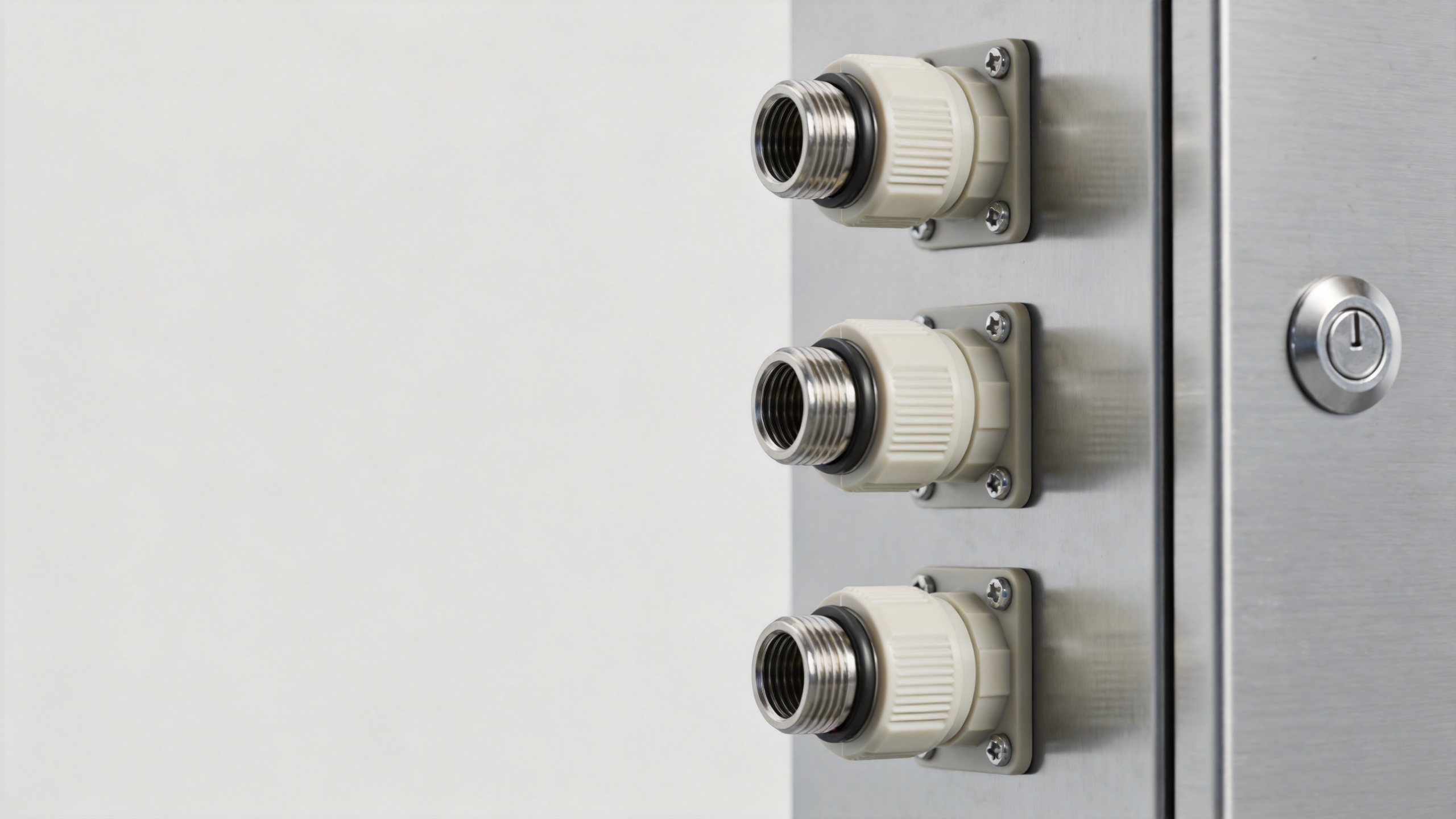
Cable Joint as a System Component
Treating a cable joint as a commodity, selected by price after the real engineering decisions are made, is the framing that leads to safety gaps. A cable joint is a system component: it completes the environmental protection of the cable into the enclosure, provides the mechanical stability the connection needs to remain reliable under load, and creates an auditable, tested entry point in a compliance-sensitive installation.
The safety of a power supply is not determined by a single component. But cable joints are the category where specification shortcuts are most common and where the failure consequences are most direct. Selecting a cable joint that is correctly rated, tested to a recognized standard, and properly sized for the actual cable OD is not over-engineering. It is the minimum required for an installation that will perform safely over its service life.


