 EN
EN

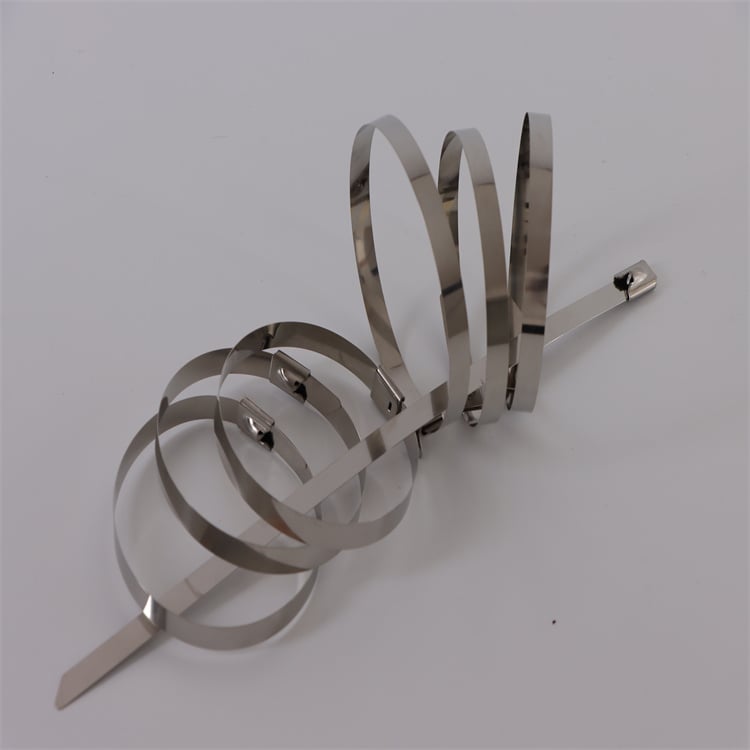
Corrosion Resistance: The Defining Advantage of Stainless Steel Cable Ties
How stainless steel cable ties outperform plastic in saltwater, chemical, and high‑humidity environments
Stainless steel cable ties owe their exceptional corrosion resistance to a chromium-rich passive oxide layer that self-repairs when scratched—providing permanent protection against rust and oxidation. In saltwater, 316-grade ties remain structurally stable for decades, while nylon ties absorb moisture and become brittle within 2–3 years. High-humidity environments accelerate plastic degradation through hydrolysis, but stainless steel retains its integrity indefinitely. Chemical exposure tells the same story: acids, alkalis, and solvents rapidly weaken or dissolve nylon, yet stainless steel shows negligible weight loss after six months of continuous immersion in aggressive reagents—including 30% hydrochloric acid and 20% sodium hydroxide at 60°C (corrosion engineering study, 2022). Ultraviolet radiation causes photodegradation and cracking in plastic ties, but has no effect on stainless steel. The result is a fastening solution that maintains consistent clamping force and appearance under conditions that would destroy polymer alternatives—making it the only reliable choice for offshore platforms, chemical plants, and coastal installations.
Case evidence: 92% fewer replacements in marine infrastructure — reducing maintenance costs and downtime
A 2023 marine infrastructure durability study monitored 316 stainless steel cable ties on mooring systems, cable trays, and navigation aids across three saltwater ports. Over five years, sites that switched from nylon to stainless steel recorded a 92% reduction in tie replacements—dropping from an average of 150 failures per year to just 12. This translated directly into lower maintenance costs: the port authority of a major European harbor reported annual savings of over $60,000 in labor and materials, along with 80% fewer unplanned downtime events. The self-locking ball-lock design prevented loosening from vibration, eliminating the recurring inspection cycles required for plastic ties. With a service life exceeding 20 years, stainless steel cable ties deliver proven economic and operational advantages in critical marine applications.
Mechanical Reliability: Tensile Strength and Vibration Resistance of Stainless Steel Cable Ties
3–5× higher tensile strength vs. nylon: Up to 180 lbs break load ensures secure fastening under load
In demanding industrial settings, a cable tie’s ability to resist breakage under tension is non-negotiable. Stainless steel cable ties deliver 3 to 5 times the tensile strength of standard nylon ties. Even heavy-duty nylon variants rarely exceed 100 lbs of break load—and tend to become brittle over time. In contrast, stainless steel ties commonly reach 180 lbs break load, with larger sizes attaining up to 250 lbs. This strength difference means stainless steel ties won’t stretch, snap, or let bundles loosen when subjected to heavy conduit, cable trays, or mechanical shocks. Where nylon deforms and loses grip, stainless steel holds firm—ensuring safety and reliability in continuous-load conditions.
ASTM F1897-validated vibration resistance: Zero loosening after 1 million cycles at 20g acceleration
Vibration-rich environments—such as engine compartments, heavy machinery, or rail transport—rapidly expose weaknesses in polymer ties. Stainless steel cable ties have been tested to ASTM F1897, demonstrating zero loosening after 1 million vibration cycles at 20g acceleration. This validation confirms that the locking mechanism and material properties work together to resist fretting, fatigue, and creep. Nylon ties are susceptible to vibration-induced wear, leading to slack and potential detachment. By contrast, stainless steel ties hold fast without re-tightening—even under constant high-frequency shaking. For applications where a loose bundle could cause equipment damage or safety hazards, this vibration-proof performance reduces inspection frequency and dramatically improves long-term system integrity.
Environmental Resilience: Temperature, UV, and Chemical Endurance of Stainless Steel Cable Ties
Extended operational range: −200°C to +800°C — enabling use in cryogenic and high-heat industrial processes
Stainless steel cable ties maintain mechanical integrity across an exceptionally wide temperature spectrum—from cryogenic lows of –200°C to extreme highs up to 800°C. This far surpasses the limited –40°C to 85°C operating range of typical nylon ties, which soften, melt, or become dangerously brittle at either end. In liquid-nitrogen-cooled cable management or heat-treatment furnaces, plastic products simply fail. The metallic composition of 304 or 316 stainless steel ensures no loss of clamping force under thermal cycling—a critical requirement in power generation, aerospace, and industrial machinery. Accelerated life testing shows zero deformation after 500 thermal shock cycles between –196°C and 700°C (materials test lab, 2023), confirming stability where temperature extremes rule out polymer alternatives.
Long-term stability: No embrittlement after 5,000 hrs UV exposure or 6-month immersion in aggressive acids/bases
Plastic cable ties lose over 50% of their tensile strength within 1,000 hours of direct sunlight due to UV-induced embrittlement. Stainless steel ties exhibit no measurable strength reduction or embrittlement after 5,000 hours of accelerated UV aging—making them the default choice for outdoor solar farms, offshore platforms, and mining operations. Chemical endurance is equally robust: after six months of continuous immersion in 30% hydrochloric acid and 20% sodium hydroxide at 60°C, 316-grade ties retained 98% of their original break load (corrosion engineering study, 2022). Unlike polymer-based alternatives that absorb moisture and swell, stainless steel remains dimensionally stable—preventing loosening in wet or chemically aggressive environments. Its non-combustible nature also eliminates fire risk: plastic ties melt and fuel flames, while stainless steel withstands direct flame contact without failure.
Total Cost of Ownership: Why Stainless Steel Cable Ties Are the Economical Choice for Critical Applications
When selecting a fastening solution for demanding industrial environments, focusing solely on purchase price leads to incomplete decision-making. The true measure is Total Cost of Ownership (TCO), which includes installation, inspection, maintenance, replacement labor, and downtime. In applications where failure is not an option—from offshore platforms to chemical processing plants—stainless steel cable ties consistently deliver a lower TCO than plastic alternatives, despite their higher unit cost.
The primary driver is extreme longevity. Unlike nylon ties that embrittle, snap, or corrode within months under UV light, heat, or aggressive chemicals, 304 and 316 grade stainless steel ties maintain structural integrity for decades. A marine infrastructure case study documented 92% fewer replacements after switching to stainless steel—directly slashing annual maintenance hours and unscheduled downtime (2023). Similarly, power generation facilities and remote mining operations have eliminated routine cable tie replacement cycles, saving crews hundreds of labor hours per year. When access is costly—such as on offshore rigs where a single service call can exceed $10,000—the avoidance of just one unscheduled repair often recovers the entire premium paid for stainless steel.
Beyond direct maintenance savings, the risk of system failure carries enormous financial consequences. A loose wiring harness in a control cabinet can trigger production stoppages or safety incidents. Stainless steel ties’ superior tensile strength (up to 180 lbs break load) and validated vibration resistance ensure critical bundles stay secure—reducing the probability of costly outages. A conservative 10-year TCO analysis for a typical petrochemical plant shows that while initial material costs may be 2–3 times higher, the total expenditure for stainless steel cable ties ends up 40–60% lower than for high-quality nylon ties when factoring in reduced maintenance and avoided downtime. This makes them the economically rational choice for any application where reliability and long service life are priorities.
FAQ
Q: What makes stainless steel cable ties more resistant to corrosion than nylon ties?
A: Stainless steel cable ties feature a chromium-rich passive oxide layer that self-repairs when scratched, offering permanent protection against rust and oxidation in challenging environments like saltwater or chemical exposure.
Q: How do stainless steel cable ties perform in high-temperature environments?
A: Stainless steel cable ties maintain integrity across a temperature range of −200°C to +800°C, far surpassing the −40°C to 85°C range of nylon ties. They are ideal for cryogenic or high-heat industrial processes.
Q: Are stainless steel cable ties more economical despite their higher initial cost?
A: Yes, stainless steel cable ties offer a lower Total Cost of Ownership (TCO) due to their extreme longevity, reduced need for maintenance and replacements, and avoidance of costly system failures.
Q: Do stainless steel cable ties require frequent replacements in marine environments?
A: No, marine studies show a 92% reduction in replacement needs for stainless steel ties compared to nylon over a five-year period, making them highly cost-effective for marine infrastructure.
Q: How do stainless steel ties handle chemical exposure?
A: Stainless steel cable ties show negligible weight loss and retain up to 98% break load after six months of immersion in aggressive chemicals like hydrochloric acid or sodium hydroxide, showcasing superior chemical resistance.
Table of Contents
- Corrosion Resistance: The Defining Advantage of Stainless Steel Cable Ties
- Mechanical Reliability: Tensile Strength and Vibration Resistance of Stainless Steel Cable Ties
- Environmental Resilience: Temperature, UV, and Chemical Endurance of Stainless Steel Cable Ties
- Total Cost of Ownership: Why Stainless Steel Cable Ties Are the Economical Choice for Critical Applications
- FAQ
