EN
EN

Correct Installation Techniques for Nylon Cable Tie Durability
Avoiding Over-Tightening and Staying Within Tensile Load Limits
When nylon cable ties are subjected to loads beyond their limits, tiny cracks start forming inside the material, which can cut their lifespan down by as much as two thirds according to research from Polymer Engineering & Science journal. To keep things running smoothly, most installers aim for around half to three quarters of what the tie is rated for (usually somewhere between 18 and 50 pounds for regular nylon types). This helps prevent the material from wearing out too quickly and keeps whatever gets tied together safe. The risks get even bigger when dealing with electrical wiring though. If someone cranks those ties too tight, they might actually damage the protective coating on wires, leading to potential shorts or failures down the road. That's why professionals often reach for calibrated tension tools instead of guessing. These gadgets make sure everyone applies just the right amount of pressure every time without going past what manufacturers recommend. And in situations where failure isn't an option at all, it pays to adjust those safety buffers depending on how harsh the environment actually is.
| Load Requirement | Recommended Safety Margin | Risk of Over-Tightening |
|---|---|---|
| Static applications | 40–50% of max strength | Low to moderate deformation |
| Dynamic/vibration environments | 30–40% of max strength | High fatigue failure risk |
| Extreme temperature zones | 20–30% of max strength | Accelerated polymer degradation |
Safe Handling: Preventing Twisting, Stretching, and Premature Release
When installing cable ties, twisting them creates uneven stress points that can actually weaken nylon ties anywhere from 25 to 40 percent compared to when they're placed correctly. A good technique is to push the tail straight into the locking mechanism while keeping the main part of the tie steady to avoid accidentally popping open the lock. Many people don't realize stretching the tie before applying it changes how the molecules line up inside the plastic, which cuts down on how much force it can hold by about 15 percent or so. Getting consistent results means paying attention to these small details during installation.
- Apply steady thumb pressure on the locking head until tension release completes
- Limit hand-tightening to intuitive force—never substitute calibrated tools with improvised leverage
- Confirm full tooth engagement via audible "click" feedback and visual inspection of lock alignment
These practices mitigate premature release during thermal cycling, when nylon’s natural contraction–expansion behavior can otherwise compromise retention.
Environmental Protection: Shielding Nylon Cable Ties from UV, Heat, and Moisture
UV Degradation and Why UV-Stabilized Nylon 6/6 Is Essential for Outdoor Use
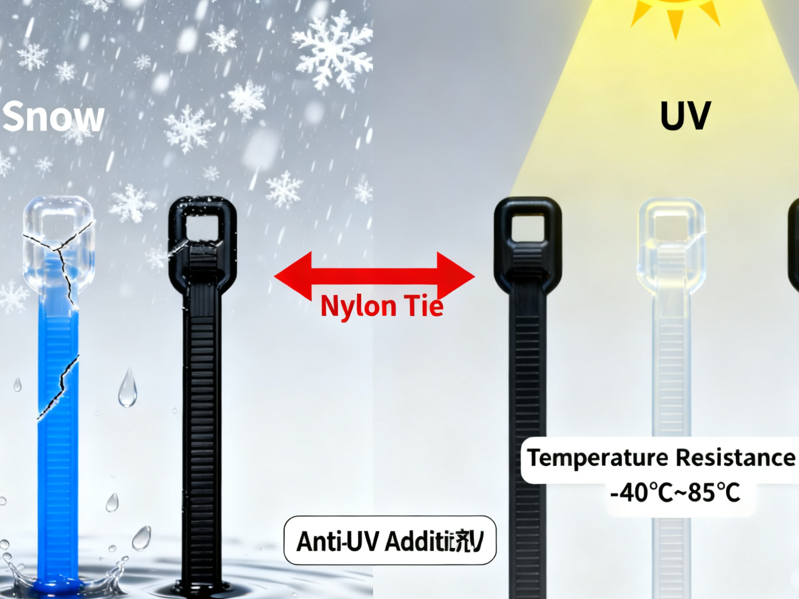
Regular nylon cable ties start breaking down pretty quickly when exposed to sunlight. Most lose over half their strength within just six months sitting out in the sun. What happens is the UV light breaks those long polymer chains in the nylon material, causing cracks on the surface, weird colors, and eventually turning them brittle enough to snap easily. The good news? There's something called UV-stabilized Nylon 6/6 that actually fights back against this damage. Manufacturers add special chemicals like HALS and UV absorbers which act like shields against harmful rays. And guess what? Black versions work even better because those tiny carbon particles soak up almost all the UV light and help manage heat too, making these ties last way longer outdoors. Lab tests show they keep at least 95% of their original strength after around 1,000 hours of simulated sun exposure. That kind of durability matters a lot for things like solar panels and cell towers where failures can be expensive. According to a recent report from Ponemon Institute, companies typically spend about $740,000 every time outdoor cable ties fail due to sun damage.
Thermal Cycling and Hydrolysis: How Temperature and Humidity Cause Embrittlement
The constant heating and cooling cycles cause nylon polymers to absorb more moisture over time. As the material expands and contracts repeatedly, tiny channels form that let in surrounding humidity. At around 60% relative humidity or higher, something called hydrolysis starts happening water actually breaks down those important amide bonds that hold nylon together structurally. What happens next is pretty bad for anyone working with nylon components. The material gets progressively brittle and loses strength until it simply can't handle normal stresses anymore, which explains why so many industrial parts made from nylon fail unexpectedly after years of service.
- Up to 30% reduction in impact resistance at 85°F (29°C)
- ~15% annual tensile strength loss in tropical climates
- Visible surface embrittlement within 18 months of continuous exposure
When it comes to heat stability, nylon gets a boost from special formulations that mix in co-polymers. These additives basically slow down molecular movement and push back the point where the material starts to soften - allowing it to keep performing even when temperatures hit around 257 degrees Fahrenheit or 125 Celsius. The real test comes in places with lots of moisture, such as those found in wastewater treatment plants. Here, these specially designed nylon components last about three times longer than regular nylon products. This isn't just lab talk either; actual tests following ASTM D570 standards plus real-world observations back up these claims, showing significant improvements in durability under tough conditions.
Strategic Material and Color Selection for Extended Nylon Cable Tie Lifespan
Black Nylon Cable Ties vs. Colored Variants: Carbon Black’s Dual Role in UV Absorption and Thermal Stability
When it comes to outdoor use or areas where temperatures fluctuate a lot, black nylon cable ties just work better than their colorful counterparts thanks to what carbon black does inside them. Carbon black is really good at soaking up UV rays, stopping over 99% of that harmful sunlight from getting through. This stops the molecules from breaking apart, which would otherwise make the ties brittle and weak over time. At the same time, carbon black helps regulate temperature too. It takes all that absorbed UV energy and turns it into gentle heat that spreads out through the tie rather than building up in one spot and causing stress points. The colored versions don't have these special additives. They just use regular dyes or pigments that do almost nothing to protect against sunlight damage. Because of this, they start to break down much quicker when left in the sun for long periods. Black ties can handle bigger temperature changes too, surviving swings of about 54 degrees Fahrenheit wider than regular nylon without losing their shape or strength season after season. Anyone who works with equipment outside knows this firsthand. Black UV-stabilized nylon 6/6 lasts way longer than those colored ones that need replacing three to five times as often in the same conditions.
| Property | Black Nylon Cable Ties | Colored Variants |
|---|---|---|
| UV Resistance | High (carbon black absorption) | Low (minimal UV blocking) |
| Thermal Stability | Enhanced (heat dissipation) | Reduced (limited regulation) |
| Outdoor Lifespan | Extended (preventative) | Shortened (degradation-prone) |
Proactive Longevity Management: Inspection, Cleaning, and Storage of Nylon Cable Ties
Early Warning Signs of Degradation—Brittleness, Cracking, Chalking, and Tension Loss
Looking at materials both visually and by touch can catch signs of wear long before something actually breaks down. When material becomes brittle and snaps easily when pressed gently between fingers, this usually means serious damage has happened at the molecular level due to either prolonged sun exposure or moisture breakdown. Small cracks forming on surfaces are another warning sign that structural integrity is weakening, often leading right into full-blown fractures later on. The appearance of chalky white residue on surfaces points directly to polymer degradation caused by sunlight reacting with oxygen molecules. Another key indicator worth watching for is when tension starts disappearing from what used to be tightly secured bundles, which generally means holding strength drops somewhere around 40%. All these warning signs become much more pronounced once temperatures exceed 85 degrees Celsius or humidity levels climb past 70%, so parts showing these symptoms should be replaced immediately if safety standards and overall system performance need to stay intact.
Optimal Storage Practices to Preserve Shelf Life and Prevent UV-Induced Aging
Proper storage preserves nylon cable ties’ functional integrity throughout shelf life. Follow these evidence-based protocols:
- Environment: Store in dark, ventilated areas at °30°C and <50% RH—conditions aligned with ISO 2742 storage guidelines for hygroscopic polymers
- Containment: Use opaque, airtight containers to block UV radiation and inhibit moisture absorption
- Handling: Avoid stacking heavy items on packaging to prevent deformation of molded locking mechanisms
- Inventory control: Implement first-expired-first-out (FEFO) rotation to minimize aging variance across stock
When stored correctly, unopened nylon cable ties retain full tensile performance for five years or longer. In contrast, UV-exposed inventory degrades up to 90% faster—even before deployment—making routine annual audits of stored stock essential for preventing unexpected in-service failures.
FAQs
- Why should nylon cable ties not be over-tightened? Over-tightening nylon cable ties can damage protective coatings on wires and cause premature failure by exceeding the tensile load limits.
- How can UV-stabilized nylon cable ties benefit outdoor applications? UV-stabilized nylon cable ties contain additives that protect against sunlight and heat, making them durable for outdoor use.
- What are early signs of nylon cable tie degradation? Early signs include brittleness, cracking, chalking, and loss of tension.
Table of Contents
- Correct Installation Techniques for Nylon Cable Tie Durability
- Environmental Protection: Shielding Nylon Cable Ties from UV, Heat, and Moisture
- Strategic Material and Color Selection for Extended Nylon Cable Tie Lifespan
- Proactive Longevity Management: Inspection, Cleaning, and Storage of Nylon Cable Ties