EN
EN

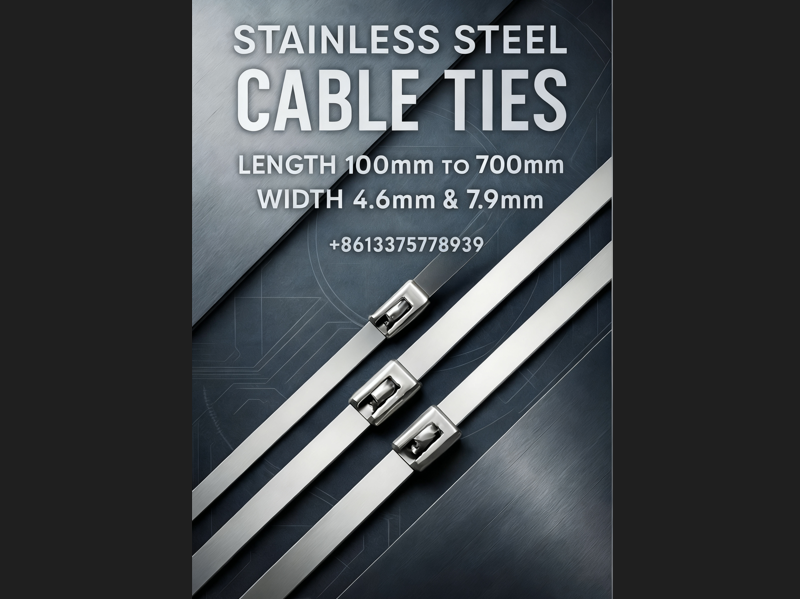
Why Stainless Steel Cable Tie Excel in Heavy-Duty Applications
Corrosion Resistance and Extreme Temperature Performance
Grade 316 stainless steel cable ties stand out when dealing with harsh conditions where corrosion and heat are major concerns. What makes these ties so effective is their molybdenum content, which gives them much better protection against saltwater damage, acid exposure, and chloride attack than regular plastic alternatives or even standard 304 stainless steel. That's why they're commonly seen in places like boats, oil rigs, and chemical processing plants where ordinary materials just wouldn't last. Nylon ties start breaking down once temperatures go over around 85 degrees Celsius, but Grade 316 can handle extreme heat without losing strength all the way up to approximately 540 degrees Celsius or 1000 degrees Fahrenheit. This means engineers working in refineries, power generation sites, and other industrial settings can count on these metal ties to stay intact even through repeated heating cycles or unexpected fire situations.
Tensile Strength and Load-Bearing Reliability per ASTM F2647-22
These cable ties meet the ASTM F2647-22 standard and can handle serious mechanical stress when subjected to heavy loads over time. They're built to withstand pulling forces well beyond what most people would expect from something so small, actually holding up to around 120 kg or 265 pounds of tension. That kind of strength makes them really useful for grouping together thick cables in places where things get shaken up a lot. Think about wind turbines where the whole structure vibrates constantly, earthquake resistant buildings needing secure connections, or busy roadways where cables need to stay put despite all sorts of movement. The locking system on these ties is pretty tough too. Unlike cheaper plastic options that tend to come loose after being exposed to constant vibrations or temperature changes, these maintain their grip. This means fewer failures down the line and better overall safety for whatever structure they're part of.
How to Identify Truly Reliable Stainless Steel Cable Tie
Material Grade Verification: Why 316 > 304 in Marine and Chemical Environments
Both 304 and 316 stainless steels provide decent protection against corrosion, but there's a big difference between them. Grade 316 actually includes around 2 to 3 percent molybdenum, which is really important because it helps prevent those annoying pits and cracks that happen when steel sits in chlorides. That's why marine environments, chemical plants, and wastewater facilities almost always need 316 grade steel instead of regular 304. Don't forget to ask for those mill test reports (MTRs) whenever ordering materials. A surprising number of suppliers either cut corners or sell fake products without enough molybdenum content. These substandard steels tend to break down much faster once they're put into actual service conditions.
Critical Physical Indicators: Edge Deburring, Surface Finish Consistency, and Lock Integrity
Manufacturing quality is evident before installation. Inspect each tie for:
- Smooth, fully deburred edges, which prevent abrasion damage to cable jackets and insulation;
- Uniform surface finish, indicating consistent heat treatment and precision die-cutting;
-
Positive lock engagement, verified by an audible “click” and zero slippage when tensioned to 50% of rated tensile load.
Reject any ties showing rough seams, inconsistent coloring, or uneven thickness—these are red flags for inadequate process control or substandard raw material.
Trusted Sources for Industrial-Grade Stainless Steel Cable Tie
Certified Distributors with Full Traceability
When dealing with applications where failure isn't an option, it makes sense to partner only with distributors who can show complete traceability throughout the supply chain plus proper documentation for compliance. Top tier suppliers typically offer CoCs that confirm everything from metal makeup to how materials were heat treated, plus they stick to important specs such as those set by AS/EN 61076 standards or the marine requirements from DNV-GL. The real protection comes down to things like getting third party checks on ASTM A240/A240M certifications, being able to track each batch all the way from raw ingots through to final products, and having records showing proper passivation was done. These aren't just nice to have items but absolute necessities if companies want to pass audits and ensure their systems perform reliably over time.
OEM Manufacturers with ISO 9001 and Mill Test Report Compliance
When companies source materials straight from ISO 9001:2015 certified original equipment manufacturers, they cut down on supply chain risks while getting proper technical accountability. The manufacturers typically provide those mill test reports or MTRs that show what kind of alloy was used plus verify important mechanical properties. We're talking about things like tensile strength at least 1140 Newtons according to ASTM F915 standards, and salt spray resistance that lasts over 500 hours after passivation treatment. Going this route with vertical integration makes sure everything stays dimensionally consistent across production runs, locks perform reliably every time, and meets all necessary requirements for structural bundling, seismic conditions, and environments where corrosion is a concern.
FAQ Section
Grade 316 includes 2-3% molybdenum, providing enhanced resistance to chlorides which are prevalent in marine environments, preventing corrosion such as pitting.
MTRs verify the alloy composition and mechanical properties of materials, ensuring compliance with required standards and confirming their suitability for specific applications.
Grade 316 stainless steel ties can withstand temperatures up to 540 degrees Celsius without losing strength, making them suitable for applications in high temperature settings such as refineries and power plants.
The locking system of these ties provides a strong grip that doesn't loosen with vibration or temperature changes, preventing failures and ensuring safety.