For decades, the cable tie was a simple, static product. But as we head toward 2026, the industrial fastening landscape is undergoing a technological renaissance. Driven by the demands of Industry 4.0, global sustainability mandates, and the need for greater operational efficiency, the humble cable tie is evolving into a "smart" component.
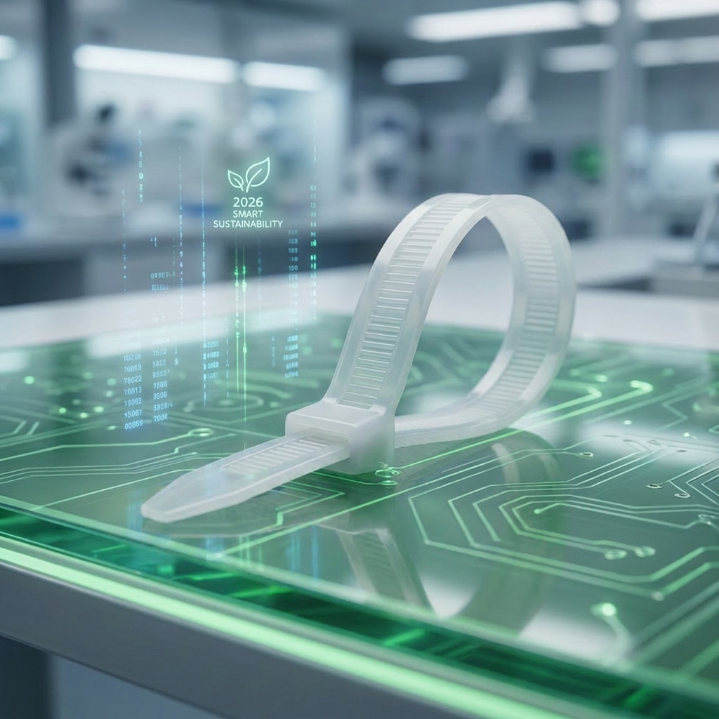
1. The Rise of Bio-Polymers and Circular Economy Materials
Sustainability is no longer a "nice-to-have"—it is a regulatory requirement. By 2026, we expect a significant shift in the raw materials used for high-performance ties.
-
- Bio-Based Nylon: Manufacturers are moving away from petroleum-based resins toward Nylon 6.10 and 6.12 derived from castor oil or other renewable sources. These materials offer high chemical resistance and lower CO2 footprints without sacrificing tensile strength.
- Recycled-Content Ties: The challenge of maintaining structural integrity with recycled plastics is being solved. Advanced molecular recycling allows factories to produce ties with 30-50% recycled content that meet the same UL standards as virgin resin.
2.Smart Fastening: RFID and NFC Integration
As data centers and large-scale manufacturing plants become more automated, the need to track every component becomes paramount.
-
- RFID-Embedded Ties: In 2026, more cable ties will feature integrated RFID (Radio Frequency Identification) tags. This allows maintenance teams to scan a bundle of cables from several meters away and instantly retrieve installation dates,
cable types, and maintenance history on a tablet.
-
- Asset Management: These "smart ties" turn every fastened bundle into a data point, facilitating better predictive maintenance and reducing the risk of human error during network upgrades.
3.Advanced Ergonomics and Installation Efficiency
The labor shortage in the electrical and construction sectors is driving a demand for tools and fasteners that reduce installation time and worker fatigue.
-
- Low-Insertion Force Designs: New tooth geometries are being developed that allow the strap to be pulled through the head with 30% less force. Over thousands of installations per day, this significantly reduces the risk of Repetitive Strain Injury (RSI) for technicians.
- Automatic Tool Integration: We are seeing a closer design marriage between cable ties and the automatic tensioning tools used in automotive assembly lines. This ensures zero-waste "flush cuts" every time, preventing sharp edges that could damage cables or injure workers.
4.Specialized Performance for Extreme Environments
As industries like aerospace and renewable energy push into more extreme territories, cable ties are following suit.
-
- Hyper-UV Resistant Materials: With the boom in solar energy, there is a need for ties that can withstand 25+ years of direct, high-intensity UV exposure in desert environments.
- Antibacterial Ties for Food & Pharma: Design innovations in the medical and food processing sectors include cable ties impregnated with silver ions to prevent the growth of bacteria and mold on the surface of the fastener.
5.Modularity and Reusability
The "throwaway" culture of industrial fasteners is being challenged.
-
- High-Strength Releasable Ties: While releasable ties have existed for years, they were often limited to light-duty applications. New designs for 2026 use dual-locking mechanisms that provide the strength of a permanent tie with the ability to be safely released and reused hundreds of times.
Conclusion
The cable tie of 2026 is a sophisticated piece of engineering. It is a data-carrying, sustainable, and ergonomically optimized tool that plays a vital role in the efficiency of modern industry.

 EN
EN


