 EN

What Is a Tile Leveler and How It Solves Lippage in Floor and Wall Tiling
Core mechanism: clamp-and-lock system for real-time planar alignment
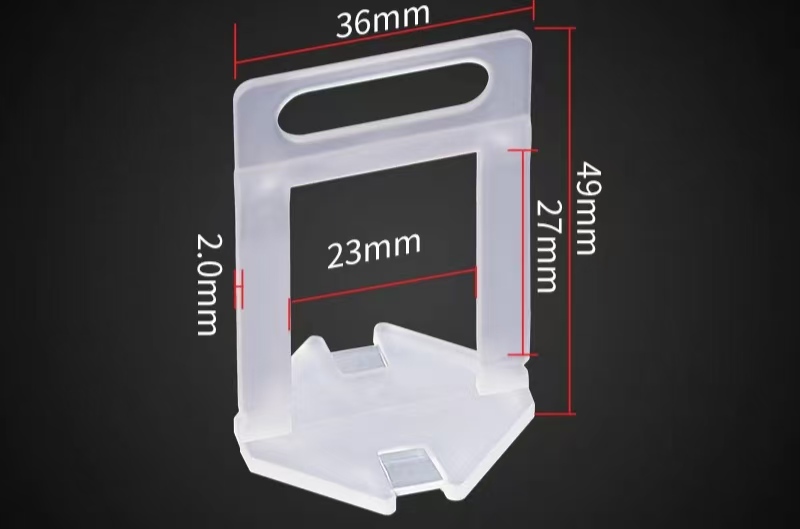
A tile leveler consists of a base strip, a cap or wedge, and tensioning pliers that work together as a clamp-and-lock system. During installation, the strip slides beneath the edges of two adjacent tiles. The cap is then pressed over the strip, and the pliers squeeze the cap to apply controlled vertical force—pulling both tile edges into the same plane and holding them there while the thin-set mortar sets. The cap’s wide contact face distributes pressure evenly across the tile surface, reducing the chance that one corner sits higher than the rest. Because the mechanism locks in place, the installer does not need to constantly recheck elevation or re-tap individual tiles. It also maintains alignment throughout the full curing window, counteracting slight mortar shrinkage that can cause movement. This real-time planar alignment is especially valuable on large-format tiles, where manual adjustment is slower and less precise. Importantly, the tool is designed to correct minor edge variation—not to compensate for a poorly prepared substrate. With proper bed thickness and consistent trowel pressure, the clamp-and-lock system helps produce a flat, continuous finish.
Why lippage occurs—and how tile leveler eliminates it across substrates
Lippage—the height difference between adjacent tile edges—arises from minor substrate irregularities, slight variations in tile thickness, or uneven thin-set shrinkage during curing. Traditional spacers control only joint width; they exert no vertical force to align tile faces. A tile leveler solves this by connecting neighboring tiles at the edge and pulling them flush before the mortar hardens. Its pressure acts vertically, not laterally, so grout joint width remains unaffected. Across substrates like concrete, drywall, and cement backer board, the system manages small inconsistencies that hand tapping cannot fully resolve. On polished, rectified, or large-format tiles—even a 0.5 mm edge difference becomes visually apparent, making precise control essential. The leveling mechanism also minimizes movement caused by mortar bed settlement, a frequent source of late-stage lippage. While it does not replace proper substrate preparation, it preserves consistent edge height once tiles are set—reducing visible shadow lines, trip hazards on floors, and misaligned vertical courses on walls.
Tile Leveler Boosts Installation Speed and Reduces Rework
A tile leveler shifts on-site workflow from repeated correction loops to a single, integrated alignment step. Installers set the base, place the tile, and engage the clamp while checking surface continuity by hand—keeping speed and accuracy aligned.
Time savings vs. traditional spacers and manual tapping methods
Traditional spacers create uniform joints but do not pull adjacent tile edges into a common plane. Installers often tap corners, insert shims, and crouch to sight surfaces before moving on. A tile leveler replaces that sequence with a clamp-and-lock action that draws edges flush while the adhesive remains workable. Field benchmarks show one-handed engagement reduces average installation time by about 30% compared with spacer-and-tap workflows (NTCA 2023). Savings stem from fewer visual checks, reduced shim adjustments, and less repetitive bending. On long floor runs and vertical wall sections, the locked correction prevents drift as thin-set begins to cure—helping crews sustain pace without sacrificing lip alignment.
Data-backed reduction in rework: 40–60% fewer corrections on commercial tile projects
Rework in commercial tile work often means removing set tile, re-applying adhesive, and re-grouting—costing time, labor, and material. Project records from 2023 commercial installations show a 40–60% reduction in correction passes when tile levelers are used from the first row. Because lippage is corrected before thin-set hardens, crews identify and resolve uneven edges early—avoiding cracked large-format tiles during late-stage adjustments and minimizing cleanup labor. Contractors report fewer punch-list items related to uneven surfaces, particularly in corridors, lobbies, and bathrooms where long sightlines expose flaws. For project managers, lower correction rates support tighter schedules and more predictable labor costs. In essence, the tile leveler functions as a preventive quality measure—not a repair tool.
Tile Leveler Compatibility and Performance Across Real-World Applications
A tile leveler adapts well to common installation conditions, provided the substrate is clean, dry, and properly prepared. Its clamp-and-lock design works across tile types and substrates without requiring separate tools.
Adaptability to concrete, drywall, and cement backer board substrates
Concrete, cement backer board, and drywall each impose different flatness and bonding demands—but the tile leveler responds consistently. On concrete floors, leveling clips bridge minor high and low areas, applying controlled downward pressure to keep adjacent edges in plane before thin-set cures. Cement backer board benefits from the same compression across seams and fastener depressions, reducing lippage risk in wet-area walls and floors. Drywall installations gain anti-slip stability, as clips hold wall tiles steady during adhesive curing and maintain uniform grout joints. Because the clips seat against tile edges—not the substrate—minor surface deviations have less impact on finished alignment. This adaptability supports mixed-substrate projects, such as a concrete bathroom floor with drywall upper walls and backer board shower surrounds. Installers can use one leveling approach across the job, simplifying tooling and setup. Proper substrate preparation remains essential, but the system adds tolerance for minor unevenness.
Support for large-format (24")+, thin-set, and rectified tiles
Large-format tiles (24 inches or larger) are prone to subtle bowing and require precise edge alignment. The leveling hardware works with thin-set mortar to pull neighboring edges into the same plane before adhesive sets—preventing lippage that manual spacers often miss. Rectified tiles, with their precisely squared edges, respond especially well to strap-and-cap or spin-type systems, which apply even pressure at the corners. This is critical for long floor planks and wall slabs, where traditional tapping is difficult to control. The same hardware works reliably with porcelain, ceramic, and natural stone—the primary compatibility factor being clip depth relative to tile thickness. Choosing the correct clip depth ensures secure engagement and optimal pressure distribution. As such, the leveling system is particularly effective for modern large-format installations.
Tile Leveler Delivers Strong ROI for Contractors and DIY Installers
A tile leveler is an investment-grade tool—not a disposable accessory. For contractors, the payback starts with fewer correction cycles: commercial tile projects show 40–60% fewer alignment fixes after initial placement, lowering labor hours and callback risk. For DIY installers, avoiding one failed layout can save the cost of replacement tile, adhesive, and grout—often $150–$400 per room depending on format and material.
Reusable systems strengthen the return. Premium tile leveler components with stainless steel inserts and marine-grade polymers withstand 25+ full installation cycles without deformation. According to 2023 field data, this cuts long-term tooling costs by up to 70% versus single-use clips. Thermal stability up to 140°F prevents warping during outdoor or sun-exposed work, ensuring reliability across multiple jobs.
That durability translates into predictable cost per square foot. A contractor who transitions from single-use spacers to a reusable tile leveler can recover the initial purchase within one or two medium-sized projects. A DIY user retains the kit for future bathrooms, kitchens, or patio upgrades. In both cases, the main ROI comes from fewer do-overs and a finished surface that does not require remedial grinding or replacement.
FAQ
What is a tile leveler used for?
A tile leveler is a tool designed to prevent lippage (uneven tile edges) by connecting and aligning adjacent tiles during the installation process. It works by applying vertical pressure to ensure all tiles are in the same plane before the thin-set mortar cures.
How does a tile leveler work?
A tile leveler operates using a clamp-and-lock mechanism. A base strip is placed under tile edges, and a cap or wedge is pressed onto the strip. Pliers then apply vertical force, locking the tiles in alignment while the adhesive sets.
Can a tile leveler eliminate lippage completely?
While a tile leveler minimizes lippage by aligning tiles, it cannot compensate for poorly prepared substrates. Proper substrate preparation is essential for optimal results.
Is a tile leveler compatible with large-format tiles?
Yes, tile levelers are especially effective for large-format tiles (24"+), which are more prone to bowing and require precise alignment. The tool works well with porcelain, ceramic, and natural stone tiles.
What substrates can I use a tile leveler on?
Tile levelers are compatible with a variety of substrates, including concrete, cement backer board, and drywall, as long as the substrate is clean, dry, and properly prepared.
Is a tile leveler reusable?
Yes, many tile levelers are made with durable materials like stainless steel and marine-grade polymers, making them reusable for multiple installation cycles, thus offering long-term cost savings.
