 EN

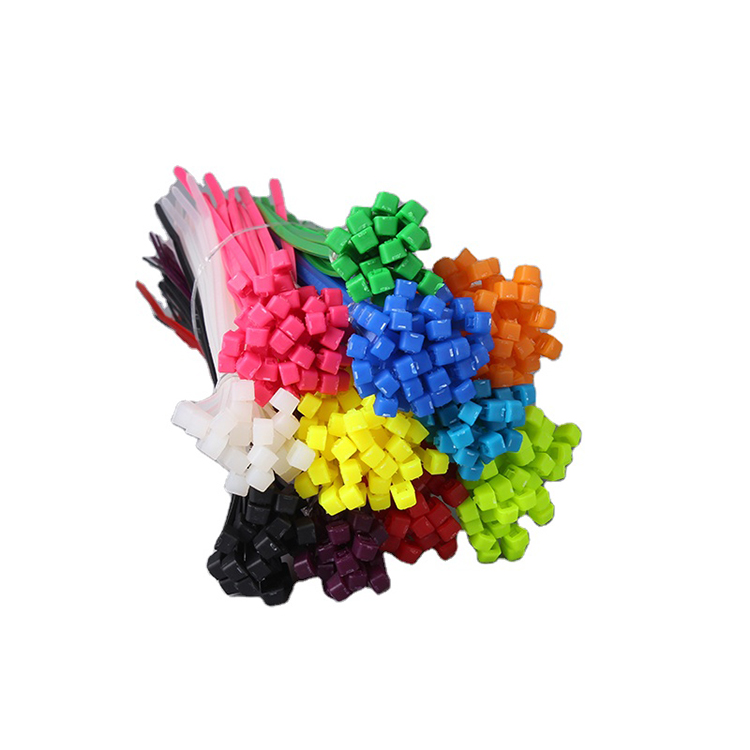
How UV Radiation Degrades Standard Nylon Cable Tie Performance
Chemical Breakdown of PA66: UV-Induced Chain Scission and Loss of Tensile Strength
Standard nylon cable ties are typically molded from PA66 (polyamide 66), a high-strength engineering thermoplastic. When exposed to sunlight, ultraviolet (UV) photons carry sufficient energy to cleave carbon–nitrogen bonds along the polymer backbone—initiating photo-oxidation and chain scission. This fragmentation shortens molecular chains, directly eroding tensile strength and elongation. Damage begins at the surface but progresses inward as microcracking exposes deeper material to further UV attack. Without stabilization, natural PA66 can lose up to 50% of its tensile strength within 6–12 months of direct outdoor exposure—meaning a tie rated at 50 pounds may fail well below its stated working load. Heat, moisture, and high-UV environments accelerate degradation; once molecular weight drops below a critical threshold, the tie loses functional integrity. That’s why indoor-rated ties are unsuitable for solar arrays, fencing, conduit, or other permanent outdoor installations. UV-resistant formulations counteract this by incorporating additives that absorb or block damaging radiation before it reaches the polymer matrix.
Visible & Functional Warning Signs: Discoloration, Surface Cracking, and Embrittlement
Before catastrophic failure, degraded nylon cable ties display clear visual and mechanical warning signs. The earliest indicator is discoloration: white or natural ties turn chalky or yellow, while colored variants fade unevenly due to UV-induced dye breakdown and oxidation product accumulation. Surface cracking follows—often concentrated around locking serrations, bend points, and bundle contact edges. Embrittlement becomes evident during handling: a weakened tie snaps cleanly with minimal flex, unlike a healthy one that deforms plastically. Reduced ductility also compromises clamping force—the pawl and teeth lose resilience, leading to slippage or loosening under load. In field applications, this manifests as sagging cables, open bundles, or sudden breakage during routine maintenance. Chalky residue, visible fractures, and snapping during adjustment are not cosmetic flaws—they signal meaningful loss of load capacity. At that point, replacement is urgent. Standard indoor ties should not remain in direct sunlight for more than a few weeks; UV-stabilized alternatives are engineered to delay these failure modes significantly.
Proven Lifespan Extension with UV Resistant Nylon Cable Tie
Accelerated Weathering Data (ASTM G154): 3–5× Longer Service Life vs. Standard Variants
ASTM G154 accelerated weathering—using fluorescent UV lamps and condensation cycles—simulates years of outdoor exposure in weeks. Unstabilized PA66 shows rapid tensile decline under this protocol, often losing over 50% of initial strength within 500–1,000 hours. In contrast, UV-stabilized nylon cable ties retain 85–90% of original tensile strength after 1,000–2,000 hours. This translates to a 3–5× longer service life before mechanical failure. Industry data (2023) estimate typical outdoor lifespan at just 1–2 years for standard ties versus 5–7 years for UV-stabilized versions. The performance gap widens dramatically in high-UV regions: unprotected ties in desert climates have been observed snapping during routine handling after a single summer.
Real-World Validation: 7-Year Field Study Across Diverse U.S. Climate Zones
A landmark 2023 seven-year field study deployed both UV-stabilized and standard PA66 cable ties across four U.S. climate zones: Phoenix, Arizona (high UV, dry heat); Miami, Florida (high humidity, salt air); Minneapolis, Minnesota (freeze-thaw cycling); and Seattle, Washington (persistent moisture, moderate UV). After 84 months, UV-stabilized samples remained flexible and fully serviceable—retaining 70–80% of initial tensile strength. Standard ties in Phoenix and Miami became brittle and cracked within 18–24 months; many failed outright during re-tensioning. In freeze-thaw environments, moisture ingress exacerbated stress on UV-weakened surfaces, accelerating breakage. The study confirmed that environmental stressors act synergistically: UV embrittlement lowers the threshold for mechanical and thermal damage. Because outdoor infrastructure is rarely inspected frequently, this long-term validation reinforces the value of specifying UV-stabilized material from the outset—not as an upgrade, but as a reliability necessity.
Engineering Advantages of UV Stabilized PA66 in Nylon Cable Tie
Dual-Defense Stabilization: Hindered Amine Light Stabilizers (HALS) + UV Absorbers
High-performance UV-stabilized PA66 for outdoor cable ties employs a dual-defense system. Hindered Amine Light Stabilizers (HALS) interrupt photo-oxidation by scavenging free radicals generated when UV energy breaks polymer bonds. UV absorbers complement this by converting incident UV radiation into harmless low-level heat before it penetrates the polymer matrix. Together, they slow chain scission and preserve tensile strength, elongation, and impact resistance. HALS are especially effective because their active nitroxyl radicals regenerate over time—extending protection for years rather than months. For black or pigmented ties used in full sun—where surface temperatures and UV intensity fluctuate daily—dual-defense formulations provide broader spectral coverage and superior long-term property retention. Proper dispersion during compounding ensures uniform additive distribution, maximizing protection across every tie.
UV Resistance as a Critical Safety and Compliance Requirement for Outdoor Nylon Cable Tie
UV resistance is not a performance preference—it’s a safety and compliance imperative for outdoor cable management. Degraded nylon cable ties can snap unexpectedly, releasing bundled cables, conduit, or signage. Consequences range from trip hazards and electrical strain to mechanical interference in moving systems. In solar arrays, telecom towers, and traffic control infrastructure, a single failed tie can compromise cable routing, grounding continuity, or insulation integrity. As such, UV-stabilized nylon cable ties support compliance with the National Electrical Code (NEC) and International Electrotechnical Commission (IEC) standards for securing wiring in exposed locations. Compliance audits often require evidence that fasteners retain ≥50% of original tensile strength after accelerated weathering—a threshold UV-stabilized ties consistently exceed. Facilities also face liability and rising maintenance costs when degraded ties cause cable sag, abrasion, or contact with rotating components. Using UV-resistant cable ties reduces unplanned replacements, extends equipment warranty validity, and serves as a foundational engineering control for mission-critical outdoor infrastructure.
FAQ
Q: What causes standard nylon cable ties to degrade under UV exposure?
A: UV radiation cleaves carbon–nitrogen bonds in the PA66 polymer, initiating chain scission and photo-oxidation, which reduce tensile strength and lead to embrittlement.
Q: How long can standard nylon ties last in outdoor environments?
A: Standard nylon ties can lose up to 50% of their tensile strength within 6–12 months of direct sunlight exposure. In harsh conditions, they may last only a few weeks to 1–2 years.
Q: What signs indicate that a nylon cable tie has been weakened by UV radiation?
A: Common warning signs include discoloration, surface cracking, embrittlement, reduced ductility, and snapping with minimal flex.
Q: How do UV-stabilized cable ties improve performance outdoors?
A: UV-stabilized ties incorporate additives like HALS and UV absorbers, which prolong material integrity by mitigating UV-induced degradation.
Q: Are UV-resistant cable ties a safety requirement?
A: Yes, UV resistance is critical for ensuring the safety and compliance of outdoor cable management systems, helping to prevent unexpected failures and hazards.
Table of Contents
-
How UV Radiation Degrades Standard Nylon Cable Tie Performance
- Chemical Breakdown of PA66: UV-Induced Chain Scission and Loss of Tensile Strength
- Visible & Functional Warning Signs: Discoloration, Surface Cracking, and Embrittlement
- Proven Lifespan Extension with UV Resistant Nylon Cable Tie
- Engineering Advantages of UV Stabilized PA66 in Nylon Cable Tie
- UV Resistance as a Critical Safety and Compliance Requirement for Outdoor Nylon Cable Tie
- FAQ
