EN
EN

How Nylon Cable Tie Locking Mechanisms Enable Safe Removal
Understanding the internal mechanics of a nylon cable tie is essential for removing it without damage. The design relies on controlled engagement and disengagement—not permanent adhesion. By learning how the locking head functions and how the material behaves, you can release the tie cleanly while preserving both the tie and the bundled cables.
The Ratchet-and-Pawl Design: Why It’s Reversible, Not Permanent
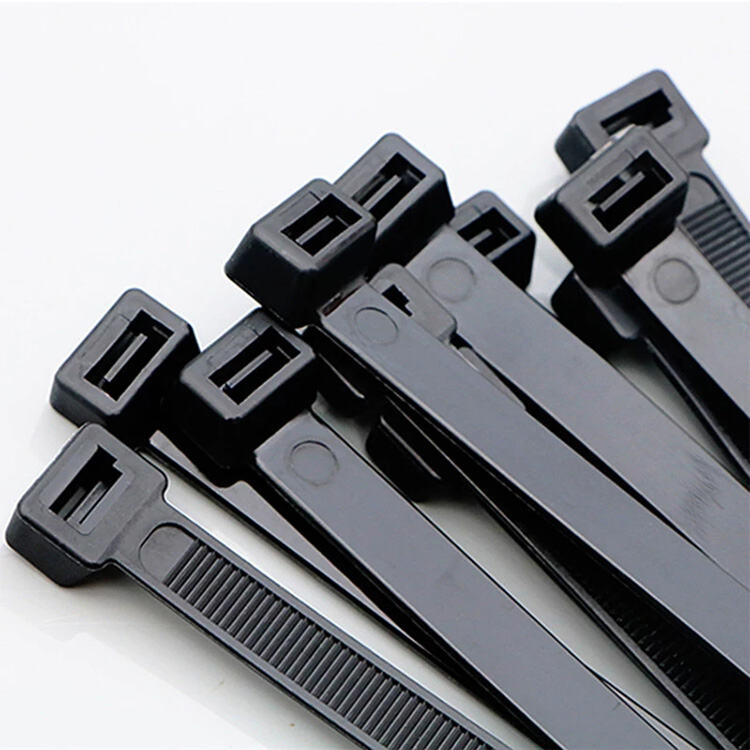
Inside the head of a standard nylon cable tie, a small flexible pawl (or locking tab) angles into the passage where the toothed strap enters. As you pull the strap tight, each tooth deflects the pawl aside; the pawl then springs back behind the tooth, preventing backward movement. This creates a one-way ratchet—designed solely for tightening. Crucially, the lock is purely mechanical: no fusion, bonding, or irreversible deformation occurs. Inserting a thin tool beneath the pawl lifts it clear of the teeth, fully disengaging the ratchet and allowing the strap to retract. This intentional reversibility enables non-destructive removal—provided the pawl is accessed carefully, without bending or fracturing the head. No cutting is required, and many ties retain full functionality for reuse.
Nylon’s Material Properties: Flexibility, Memory, and Low Friction
Nylon’s engineering-grade characteristics make this reversible locking reliable and repeatable. Its high flexural resilience allows the pawl to bend sufficiently for tooth passage yet return consistently to its original shape—a property known as elastic memory. This ensures long-term ratchet integrity across multiple cycles. Equally important is nylon’s low coefficient of friction, which permits smooth strap travel during both tightening and controlled retraction. These traits prevent binding, galling, or jamming that would otherwise necessitate destructive removal. Together, the ratchet-and-pawl mechanism and nylon’s inherent behavior deliver a secure—but never permanent—hold, optimized for safe, repeatable release.
Effective Non-Destructive Nylon Cable Tie Removal Methods
Removing a nylon cable tie without cutting requires precise manipulation of its internal locking mechanism. Two proven techniques use common hand tools to lift or depress the pawl cleanly—preserving both the tie and the bundle.
Flathead Screwdriver Technique: Precise Pawl Disengagement
Insert a small flathead screwdriver between the tie head and the locking tab. Gently tilt the tip upward to lift the pawl away from the teeth while simultaneously pulling the tail outward. Maintain a shallow angle—under 15 degrees—to avoid scratching the head or contacting wire insulation. Apply pressure only to the release latch itself. Once disengaged, the tail retracts freely. This method works best on standard-width ties and is ideal when reuse is intended for temporary bundling.
Needle-Nose Pliers Method: Targeted Pressure on the Locking Tab
Use needle-nose pliers to apply focused, downward pressure on the locking tab from the top of the tie head. Compress just enough to separate the pawl from the teeth, then pull the tail out smoothly. Avoid over-compression—excessive force can crack the nylon housing. This technique excels in confined spaces where a screwdriver lacks clearance. On certain reusable models, a visible release button sits atop the head; pressing it with the pliers’ tip unlatches the mechanism instantly. Both methods demand steady control and minimal applied force to protect the cable bundle.
Specialized Tools for Reliable Nylon Cable Tie Release
For frequent adjustments or mission-critical bundling, purpose-built tools deliver greater consistency and safety than improvised methods. A dedicated cable tie cutter severs excess tail flush with the head—eliminating sharp protrusions that could abrade nearby wires. More significantly, a cable tie tensioning tool (commonly called a tie gun) applies calibrated, repeatable tension before trimming, preventing under- or overtightening. Several advanced models integrate a built-in release lever that mechanically disengages the pawl without cutting—making them indispensable for test setups, prototyping, or temporary installations where repeated tie reuse is expected. Using these engineered solutions maintains nylon cable tie integrity while safeguarding the cables they secure.
Avoiding Collateral Damage During Nylon Cable Tie Removal
Protecting Wires and Insulation: Position, Angle, and Tension Control
Safe removal hinges on minimizing unintended stress on adjacent components. The greatest risks are nicking wire insulation or crushing delicate connectors beneath an overtightened tie. Mitigate these through disciplined technique:
- Position: Place tools exclusively on the locking tab—never on the strap or surrounding wires.
- Angle: Apply force perpendicular to the tie head to prevent slippage onto insulation or adjacent conductors.
- Tension: Maintain slight slack in the tie before disengagement to reduce compressive load on the bundle.
A 2023 industry study on wire harness integrity found improper angle control contributed to 62% of insulation breaches during tie removal. Always inspect the area beneath the tie first. If overtightened, gently loosen the strap with needle-nose pliers before lifting the pawl—this reduces strain on underlying components and supports clean, non-destructive release.
FAQ
Q: Can nylon cable ties be reused after removal?
A: Yes, nylon cable ties can be reused if removed carefully without damaging the locking mechanism or strap.
Q: What tools can I use to safely remove a nylon cable tie?
A: Common tools like a small flathead screwdriver or needle-nose pliers can be used for careful removal. Specialized tools like cable tie tensioning tools are also highly effective.
Q: How do I minimize damage to the wires during removal?
A: Position tools exclusively on the locking tab, use a perpendicular angle to the tie head, and reduce tension before disengaging the tie to avoid stressing adjacent wires.
Q: Are there ties designed specifically for easy removal?
A: Yes, some reusable nylon cable ties feature a release button on the head for effortless disengagement.