EN
EN

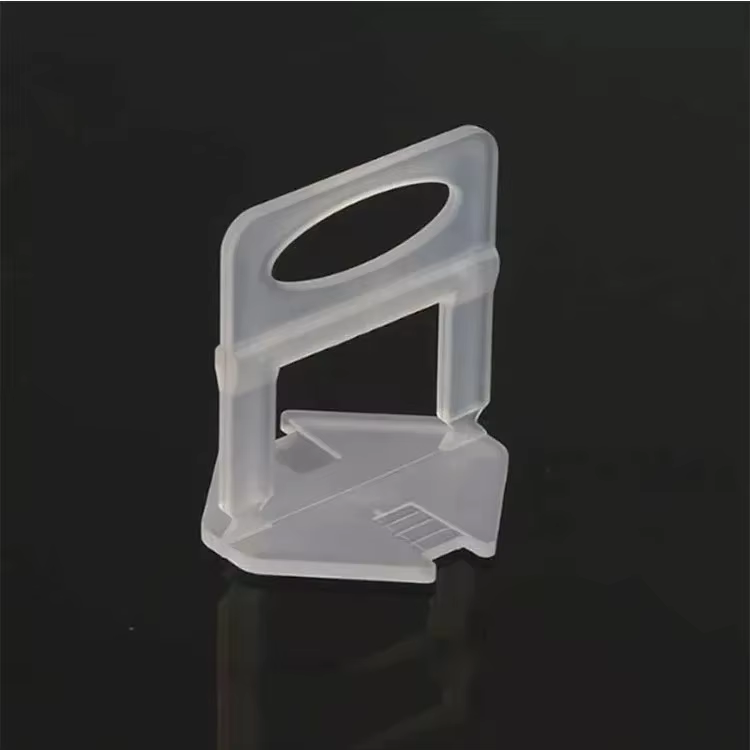
Precision Alignment: Why Sub-Millimeter Accuracy Defines a Reliable Tile Leveler
Micrometer-Adjustable Clamps for Consistent <0.5mm Tolerance
Professional tile installations demand microscopic precision—surface irregularities over 0.5mm become visible under angled light and compromise structural integrity. Modern tile levelers achieve this through micrometer-calibrated clamping mechanisms that apply incremental, repeatable pressure. Unlike primitive wedge systems requiring manual force estimation, these clamps feature threaded tension rods with graded markings for controlled 0.1mm increments, spring-loaded bases that maintain uniform pressure despite adhesive shrinkage, and self-locking gears that prevent slippage during curing. Field tests confirm installations using such calibrated clamps achieve 98% compliance with ANSI A108.19 lippage standards—significantly outperforming traditional methods at 74%.
Dual-Directional Pressure Distribution Eliminates Lippage Across Large-Format Tiles
Large-format porcelain (up to 1200×600mm) magnifies installation challenges—conventional levelers create uneven stress points that lift tile corners. Advanced systems counteract this with vectored force technology: horizontal tension arms resist lateral shifting during adhesive settlement; vertical compression pads distribute downward force evenly across the tile surface; and pivoting bases automatically adapt to minor substrate imperfections. This dual-axis approach neutralizes differential pressures that cause lippage. Ceramic industry benchmarks show dual-directional systems reduce height variations by 83% compared to single-plane levelers when installing 900mm tiles—delivering seamless transitions that meet commercial flatness requirements of ≤1/32" per 10 feet.
Material Science: How Engineering-Grade Nylon Ensures Tile Leveler Durability and Strength
Tensile Strength & Impact Resistance: ASTM D638 Data vs. Recycled Alternatives
Engineering-grade nylon—particularly virgin PA66—provides the mechanical robustness required for professional tile levelers. Per ASTM D638 testing, virgin PA66 delivers tensile strengths of 80–90 MPa, enabling levelers to withstand over 10,000 stress cycles without deformation. This ensures arm rigidity and consistent pressure distribution during large-format tile installations. In contrast, recycled alternatives exhibit 30–40% lower tensile strength (typically 40–60 MPa) and diminished impact resistance—increasing fracture risk in cold environments or under sudden loads. Polymer studies published in 2023 confirm recycled materials begin failing after just 5,000–7,000 cycles due to microfractures and polymer chain degradation. For installers, this translates directly to fewer on-site failures and lower long-term replacement costs—especially critical when sub-millimeter tolerances must be maintained across hundreds of tiles.
Ergonomic Efficiency: Design Innovations That Accelerate Tile Leveler Deployment On-Site
One-Handed Engagement Cuts Installation Time by 30% (NTCA 2023 Benchmark)
Single-hand operation systems allow installers to secure tiles while simultaneously adjusting pressure—eliminating the need for dual-hand coordination. NTCA’s 2023 field study validated a 30% reduction in average installation time, driven by streamlined workflow and reduced physical fatigue. Less fatigue also sustains accuracy over extended sessions—preserving alignment fidelity from first tile to last.
Modular Spacers and Universal Base Compatibility for All Tile Leveler Formats
Interchangeable spacer components adapt seamlessly to thickness variations—from 3mm mosaics to 20mm stone slabs—without requiring tool changes. Universal base designs integrate with both conventional and proprietary tile leveler systems, simplifying inventory management and preventing project delays when switching between tile formats. Standardized interfaces ensure consistent pressure transfer across complex layouts.
Design Optimization Table
| Feature | Efficiency Impact | Industry Standard |
|---|---|---|
| Single-handed locking | 30% faster installations | NTCA 2023 validation |
| Modular spacer kits | Zero tool-change transitions | ISO 13006 tile guidelines |
| Universal bases | Cross-system compatibility | ANSI A108.16 compliance |
Long-Term Reliability: Reusability, Corrosion Resistance, and Thermal Stability of Premium Tile Leveler Systems
Premium tile leveler systems are engineered for longevity—not disposability. Reusable components withstand 25+ full installation cycles without deformation, reducing waste and lowering long-term tooling costs by up to 70% versus single-use alternatives. Stainless steel inserts and marine-grade polymers deliver inherent corrosion resistance, preserving structural integrity when exposed to moisture, grout chemicals, and freeze-thaw cycles—making them ideal for wet-area applications like showers and pool decks. Thermal stability ensures performance consistency across environments: advanced nylon composites retain full tensile strength up to 140°F (60°C), preventing warping during outdoor installations under direct sunlight. Together, these three attributes transform tile levelers from consumables into investment-grade tools—reliably upholding sub-millimeter alignment, project after project.
FAQ Section
Why is sub-millimeter accuracy important in tile installation?
Sub-millimeter accuracy ensures uniformity, eliminates visible surface irregularities, and maintains the structural integrity of the tiled surface.
What materials are recommended for durable tile levelers?
Engineering-grade nylon, especially virgin PA66, is recommended due to its high tensile strength and impact resistance.
How do dual-directional levelers improve large-format tile installations?
They counteract uneven stress points by distributing pressure evenly both horizontally and vertically, reducing height variations and lippage.
What is the benefit of single-handed engagement systems?
They streamline the installation process, reducing time by 30% and minimizing physical fatigue for installers.
Are reusable tile levelers more cost-effective?
Yes, reusable levelers lower long-term costs by enduring multiple installation cycles without deformation or corrosion.
Table of Contents
- Precision Alignment: Why Sub-Millimeter Accuracy Defines a Reliable Tile Leveler
- Material Science: How Engineering-Grade Nylon Ensures Tile Leveler Durability and Strength
- Ergonomic Efficiency: Design Innovations That Accelerate Tile Leveler Deployment On-Site
- Long-Term Reliability: Reusability, Corrosion Resistance, and Thermal Stability of Premium Tile Leveler Systems
- FAQ Section