 EN
EN

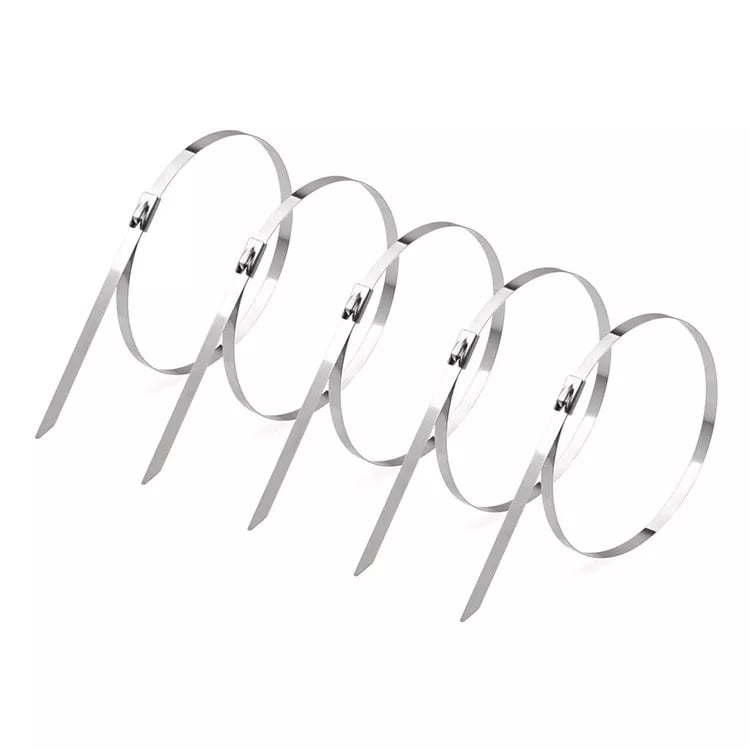
Corrosion Resistance of Stainless Steel Cable Ties in Harsh Conditions
For industrial fastening applications, corrosion resistance is one of the most important factors when selecting a stainless steel cable tie. Compared with traditional polymer cable ties, stainless steel versions provide better durability in environments exposed to moisture, salt spray, chemicals, and outdoor conditions.
The corrosion resistance of stainless steel comes from its chromium content, which forms a passive oxide layer on the surface. This protective layer helps the material resist oxidation and allows it to recover from minor surface damage.
However, the performance of a stainless steel cable tie depends greatly on the selected material grade and operating environment.
304 vs 316 Stainless Steel Cable Tie: Choosing the Right Material Grade
304 and 316 stainless steel are two commonly used materials for stainless steel cable ties.
304 stainless steel provides reliable corrosion resistance for many general industrial applications, including indoor equipment, machinery, and mild outdoor environments.
316 stainless steel contains molybdenum, which improves resistance to chloride-related corrosion. This makes 316 stainless steel cable ties a preferred choice for applications exposed to seawater, coastal conditions, chemical processing environments, and high-humidity locations.
The difference becomes especially important in environments where chloride ions may cause pitting corrosion. For marine installations, offshore equipment, and chemical facilities, 316 stainless steel often provides a longer service life and more stable fastening performance.
When selecting between 304 and 316 stainless steel cable ties, factors such as exposure conditions, temperature, chemical contact, and maintenance requirements should all be considered.
Chemical Resistance of Stainless Steel Cable Ties
Industrial environments may expose cable fastening systems to oils, cleaning agents, chemicals, and corrosive gases. Stainless steel cable ties offer strong resistance against many common industrial substances.
316 stainless steel performs well in many applications involving:
- Saltwater exposure
- Humid environments
- Mild chemical contact
- Food processing areas
- Industrial equipment
However, no stainless steel grade is suitable for every chemical environment. Strong acids, high temperatures, or highly aggressive chemicals may require additional material evaluation before selection.
For demanding applications, checking chemical compatibility data and confirming the required stainless steel grade can help prevent premature failure.
Temperature Stability and Outdoor Durability
One major advantage of stainless steel cable ties is their ability to maintain mechanical performance across a wide temperature range.
Unlike nylon cable ties, which may become brittle in cold environments or lose strength under elevated temperatures, stainless steel maintains its structural properties more effectively in extreme conditions.
This makes stainless steel cable ties suitable for applications such as:
- Industrial equipment
- Power generation systems
- Automotive environments
- Outdoor infrastructure
- Heavy machinery
Stainless steel is also naturally resistant to UV radiation. Unlike plastic materials that can degrade after long-term sunlight exposure, stainless steel does not experience polymer aging, helping maintain fastening reliability in outdoor installations.
Mechanical Strength and Reliability Under Vibration
Stainless steel cable ties are widely used where strong and stable fastening is required.
Their metal construction provides:
- High tensile strength
- Good vibration resistance
- Stable clamping performance
- Long-term dimensional stability
In applications such as transportation equipment, industrial machinery, and electrical installations, stainless steel cable ties can provide dependable cable management where plastic alternatives may require more frequent replacement.
The self-locking structure also helps maintain secure fastening after installation, reducing the risk of loosening caused by movement or vibration.
Applications of Stainless Steel Cable Ties
Because of their corrosion resistance and mechanical durability, stainless steel cable ties are commonly used in industries including:
Marine and Offshore Applications
Marine environments expose fastening components to saltwater and humidity. 316 stainless steel cable ties are often selected for shipbuilding, offshore equipment, and coastal installations due to their improved chloride resistance.
Chemical and Industrial Facilities
Manufacturing plants, processing facilities, and industrial equipment often require fastening solutions that can withstand moisture, chemicals, and continuous operation.
Stainless steel cable ties provide a durable option for securing cables, pipes, and components in these environments.
Outdoor Infrastructure
For solar systems, communication equipment, lighting systems, and outdoor electrical installations, stainless steel cable ties offer reliable performance under long-term weather exposure.
How to Select the Right Stainless Steel Cable Tie
Choosing the correct stainless steel cable tie requires considering several factors:
- Material grade (304 or 316 stainless steel)
- Installation environment
- Required tensile strength
- Temperature conditions
- Chemical exposure
- Cable bundle size
For general industrial use, 304 stainless steel may provide sufficient performance. For marine, coastal, or chloride-rich environments, 316 stainless steel is usually a better choice.
Working with an experienced stainless steel cable tie manufacturer can also help ensure the selected product meets application requirements.
FAQ
What is the difference between 304 and 316 stainless steel cable ties?
304 stainless steel cable ties are suitable for many general industrial applications, while 316 stainless steel cable ties provide improved corrosion resistance, especially in marine and chloride-rich environments.
Are stainless steel cable ties suitable for outdoor use?
Yes. Stainless steel cable ties resist UV exposure, moisture, and weather conditions, making them suitable for many outdoor applications.
Can stainless steel cable ties resist chemicals?
Stainless steel cable ties offer good resistance to many industrial chemicals, but the correct material grade should be selected based on the specific chemical environment.
Why choose stainless steel cable ties instead of nylon cable ties?
Stainless steel cable ties provide higher temperature resistance, stronger mechanical stability, and better long-term performance in harsh environments.
Which stainless steel grade is better for marine applications?
316 stainless steel is commonly preferred for marine environments because its molybdenum content improves resistance to chloride corrosion.
Table of Contents
- Corrosion Resistance of Stainless Steel Cable Ties in Harsh Conditions
- 304 vs 316 Stainless Steel Cable Tie: Choosing the Right Material Grade
- Chemical Resistance of Stainless Steel Cable Ties
- Temperature Stability and Outdoor Durability
- Mechanical Strength and Reliability Under Vibration
- Applications of Stainless Steel Cable Ties
- How to Select the Right Stainless Steel Cable Tie
-
FAQ
- What is the difference between 304 and 316 stainless steel cable ties?
- Are stainless steel cable ties suitable for outdoor use?
- Can stainless steel cable ties resist chemicals?
- Why choose stainless steel cable ties instead of nylon cable ties?
- Which stainless steel grade is better for marine applications?
