 EN
EN

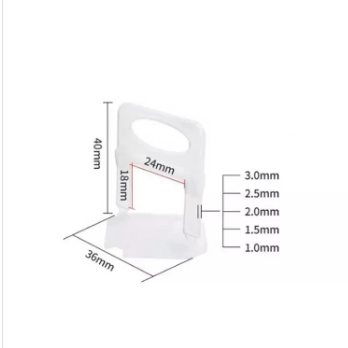
Why Tile Lippage Happens in Modern Tile Installation
Large-format tiles and thin porcelain tiles have become increasingly popular in residential and commercial projects because they create clean, continuous surfaces. However, their larger dimensions and thinner profiles also make installation challenges more noticeable, especially the issue of tile lippage.
Tile lippage refers to the height difference between two adjacent tile edges. Even small variations can create visible unevenness, affecting the appearance and overall quality of the finished surface.
Several factors can contribute to lippage, including:
- Uneven substrate conditions
- Tile thickness variations
- Adhesive movement during curing
- Installation technique differences
- Natural tile warpage
For large-format tiles, maintaining a flat surface requires more than traditional spacing methods. A tile leveler helps installers keep adjacent tiles aligned during the setting process, improving surface consistency before the adhesive fully cures.
How Tile Leveling Systems Work
Traditional tile spacers are mainly designed to maintain consistent grout joint width. However, they do not control the vertical relationship between neighboring tiles.
A tile leveling system uses components such as clips and wedges to apply controlled pressure between adjacent tiles. This helps keep tile edges at a similar height while the adhesive sets.
The main benefits include:
- Improved tile surface flatness
- Reduced risk of uneven tile edges
- Easier adjustment during installation
- More consistent results across large areas
By maintaining tile alignment during curing, leveling systems help installers achieve a cleaner and more professional finish.
Why Large Format and Thin Tiles Benefit from Tile Levelers
Large-format porcelain tiles often require careful handling because their larger surface area can make small installation variations more visible.
Thin tiles can also be more sensitive to:
- Substrate imperfections
- Uneven adhesive coverage
- Installation pressure differences
A tile leveler provides additional control during placement, helping reduce movement and alignment problems before the adhesive reaches full strength.
For applications such as:
- Commercial flooring
- Luxury residential projects
- Large porcelain panels
- Natural stone installations
tile leveling systems can help improve installation consistency and reduce correction work.
Improving Installation Efficiency and Reducing Rework
Tile installation quality directly affects project schedules and customer satisfaction. Uneven tile surfaces may require additional adjustment, replacement, or repair after installation.
Using a tile leveler can simplify the installation process by:
- Reducing repeated manual adjustments
- Helping maintain alignment between tiles
- Improving installer confidence
- Supporting more predictable project results
For contractors handling large areas or premium tile materials, leveling systems can become a valuable tool for improving workflow efficiency.
Choosing the Right Tile Leveler System
Different tile projects require different leveling solutions. When selecting a tile leveling system, installers should consider:
Tile Size and Thickness
Large and heavy tiles may require stronger clips and wedges to maintain alignment during installation.
Installation Environment
Floor and wall applications may require different leveling designs depending on tile weight and installation conditions.
Reusability and Installation Method
Some systems are designed for single-use clips with reusable wedges, while others focus on fast installation and easy removal.
Tile Material
Porcelain, ceramic, and natural stone tiles may have different installation characteristics, so the leveling system should match the specific material requirements.
Tile Levelers as a Practical Solution for Modern Tile Projects
As tile sizes continue to increase, achieving a flat and visually consistent surface becomes more challenging. Tile leveling systems provide installers with better control over tile positioning and help address common problems such as lippage and uneven alignment.
While proper substrate preparation, adhesive selection, and installation technique remain essential, a tile leveler can be an effective supporting tool for achieving higher-quality tile installations.
FAQ
What is tile lippage?
Tile lippage is the height difference between adjacent tile edges. It can affect appearance, comfort, and the overall quality of a tiled surface.
How does a tile leveler work?
A tile leveler uses clips and wedges to hold neighboring tiles in alignment during adhesive curing, helping create a flatter finished surface.
Are tile spacers enough to prevent lippage?
Tile spacers mainly control grout spacing. They do not correct height differences between adjacent tiles, which is why leveling systems are often used for larger tiles.
Are tile levelers useful for large format tiles?
Yes. Tile leveling systems are commonly used for large-format tiles because these materials require careful alignment to achieve consistent results.
Can tile levelers reduce installation problems?
A tile leveler can help reduce alignment issues and adjustment work, but proper substrate preparation and installation techniques are still important.
Table of Contents
- Why Tile Lippage Happens in Modern Tile Installation
- How Tile Leveling Systems Work
- Why Large Format and Thin Tiles Benefit from Tile Levelers
- Improving Installation Efficiency and Reducing Rework
- Choosing the Right Tile Leveler System
- Tile Size and Thickness
- Installation Environment
- Reusability and Installation Method
- Tile Material
- Tile Levelers as a Practical Solution for Modern Tile Projects
- FAQ
