 EN
EN

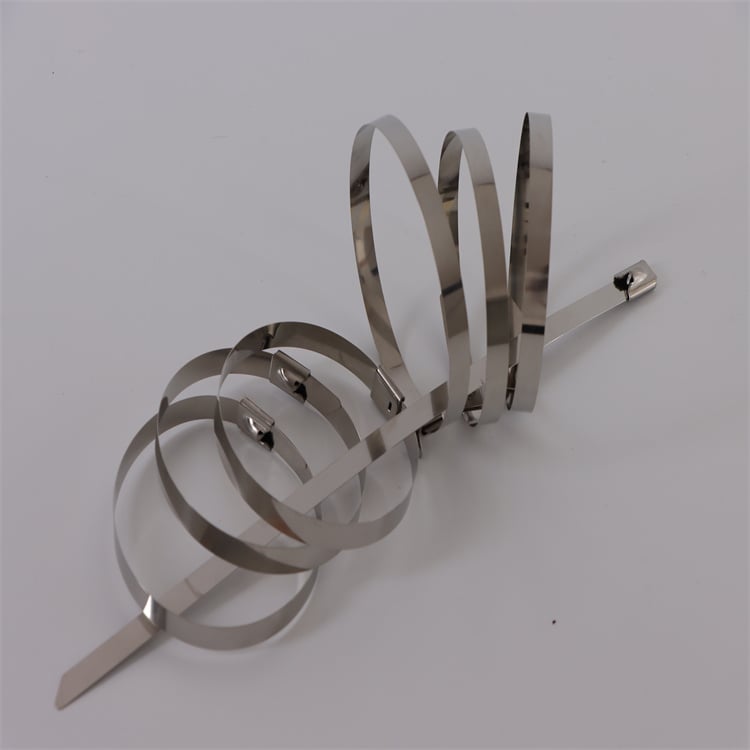
Unmatched Mechanical Protection for Long-Term Cable Integrity
Cable bundles in industrial and infrastructure settings face constant threats from vibration, sharp edges, and environmental wear. A stainless steel cable tie delivers a fundamentally different level of mechanical safeguarding compared to common polymer alternatives. Its metallic construction provides a cut-resistant, non-stretching barrier—directly preventing sheath abrasion and crushing pressure that lead to premature dielectric breakdown and dangerous short circuits.
High Tensile Strength and Abrasion Resistance vs. Nylon and Polypropylene
The core advantage lies in material science: stainless steel’s inherent strength versus the mechanical limitations of plastic ties. While nylon 6/6 and polypropylene are widely used for their low cost and flexibility, they fall short in demanding environments. Standard nylon ties offer tensile strength between 18–50 kg and degrade rapidly when abraded against metal or concrete; polypropylene performs worse—lower strength and brittle failure in cold conditions. In contrast, 304 or 316 stainless steel ties deliver tensile holding forces exceeding 100 kg, forming a rigid, non-yielding loop that resists loosening or snapping under sustained load. This ensures cables remain tightly bundled, eliminating micro-motion friction that gradually erodes insulation.
A direct comparison clarifies the protective capabilities:
| Material | Typical Tensile Strength | Abrasion Resistance | Long-Term Cable Protection Outcome |
|---|---|---|---|
| Polypropylene | Low (~15–25 kg) | Very Low; brittle failure under impact | Minimal protection; tie failure leads to loose, rapidly abrading cables. |
| Nylon 6/6 | Moderate (18–50 kg) | Low; frays and weakens over time | Adequate for temporary pulls; requires replacement cycles in dynamic environments. |
| Stainless Steel (304/316) | Very High (100+ kg) | Extremely High; unaffected by sharp edges | Permanent, rigid bundling that eliminates fretting wear and crush damage. |
Consistent, Corrosion-Resistant Clamping Force in Humid, Saline, or Industrial Environments
Mechanical protection is only valuable if it endures. Standard steel ties rust—introducing corrosive agents directly onto cable jackets—while plastic ties relax due to creep and thermal expansion, losing clamping force within weeks. Grade 316 stainless steel solves both problems permanently. Its molybdenum content delivers robust resistance to chloride-induced pitting and crevice corrosion in salt spray, chemical washdowns, or high-humidity atmospheres—thereby shielding cables from secondary chemical attack. Crucially, the alloy exhibits virtually no creep at ambient service temperatures. Once installed, it maintains consistent, high-retention clamping force across decades—preserving protective compression from day one through infrastructure end-of-life. This dimensional stability eliminates re-tensioning maintenance, a critical advantage in hard-to-access locations like offshore wind turbine towers, elevated cable trays, or oil and gas process modules where a loosened nylon tie would immediately compromise system safety and reliability.
Thermal and Chemical Stability: Safeguarding Cables Across Extreme Conditions
Cable bundling in severe environments demands more than physical toughness—it requires immunity to thermal cycling and chemical exposure. A stainless steel cable tie delivers both, maintaining structural integrity across temperature ranges that would destroy nylon or polypropylene within minutes. Where polymer ties soften near 85 °C and crack below –40 °C, stainless steel remains dimensionally stable—preserving bundle geometry and protecting cable insulation from heat deformation or cold-induced stress.
Reliable Performance from –200°C to +800°C Without Embrittlement or Melting
Grade 316 stainless steel cable ties operate reliably from cryogenic temperatures down to –200 °C up to continuous service temperatures of +800 °C—without melting, softening, or embrittling. At the low end, its austenitic structure retains ductility and clamping force even under liquid-nitrogen chill. At high temperatures, nylon ties melt outright—typically above 200 °C—while stainless steel preserves full tensile strength, preventing loosening that can cause jacket slippage and abrasion. This resilience is essential in furnace wiring, engine compartments, and arctic installations, where temperature excursions would render plastic-only fasteners nonfunctional within hours. Long-term, the absence of thermal degradation means no micro-cracks or creep—eliminating a root cause of cable-sheath damage and unplanned maintenance.
Immunity to Hydrocarbons, Solvents, and Salt Spray—Eliminating Chemical Degradation Failures
Offshore platforms, refineries, and chemical plants routinely expose cable bundles to salt spray, diesel, hydraulic oils, and aggressive solvents. Polyamide ties absorb moisture and swell, losing clamping force; many polymers swell or dissolve in hydrocarbons. Stainless steel is fundamentally inert to these agents. Grade 316 withstands continuous salt-spray testing far longer than any organic tie and shows no degradation when exposed to MEK, toluene, or transmission fluids. This chemical immunity directly prevents cable damage: a tie that stays strong prevents sheathing from rubbing against rough surfaces or adjacent lines. In marine and industrial atmospheres—where corrosion pits plastic-coated metal ties and cracks nylon—stainless steel cable ties maintain cross-sectional integrity and tension, ensuring vibration or thermal cycling never abrades insulation and triggers short circuits or ground faults.
Proven Reliability in Mission-Critical Applications
Offshore Wind Turbines: 92% Reduction in Cable Sheath Cracking Over 5 Years Using Stainless Steel Cable Ties
In offshore wind farms, constant vibration, salt-laden air, and aggressive motions place severe strain on cable sheaths. A 2023 field assessment across multiple North Sea installations revealed that switching to stainless steel cable tie fasteners reduced cable sheath cracking incidents by 92% over five years. This dramatic improvement stems from the tie’s high tensile strength and edge-smooth design—which prevent abrasion even during blade pitch cycling. Unlike nylon alternatives that embrittle and snap, stainless steel maintains a steady, corrosion-resistant hold—keeping cable assemblies secure and insulation intact without mid-lifecycle replacements.
Railway Signaling and Petrochemical Plants: Zero Field Failures After 7+ Years of Continuous Service
In railway signaling and petrochemical plants—where chemical exposure, persistent vibration, and temperature swings are routine—cable ties face relentless stress. Installations monitored over seven years showed zero field failures using stainless steel cable tie solutions. The material’s immunity to hydrocarbons, solvents, and salt spray prevented the chemical degradation that typically shortens plastic tie life. Combined with a consistent clamping force that does not relax, the ties kept cable bundles organized and electrically sound—delivering uninterrupted performance in safety-critical systems.
FAQ Section
What is the main benefit of stainless steel cable ties compared to plastic alternatives?
Stainless steel cable ties offer unmatched mechanical protection, higher tensile strength, and resistance to abrasion, corrosion, and chemical degradation, making them ideal for demanding industrial environments.
How do stainless steel cable ties perform in extreme temperatures?
Grade 316 stainless steel cable ties operate reliably across a wide temperature range from –200°C to +800°C without embrittlement or melting, unlike plastic ties that degrade under extreme heat or cold.
Are stainless steel cable ties resistant to chemical exposure?
Yes, stainless steel cable ties are highly resistant to hydrocarbons, solvents, and salt spray, maintaining their integrity and clamping force in aggressive environments like refineries and chemical plants.
What environments benefit most from the use of stainless steel cable ties?
Environments such as offshore platforms, railway signaling systems, petrochemical plants, and wind turbines benefit significantly due to the ties’ durability against corrosion, vibration, and harsh conditions.
Do stainless steel cable ties require maintenance or replacement?
No, stainless steel cable ties offer long-term reliability and dimensional stability, eliminating the need for re-tensioning or mid-lifecycle replacements in hard-to-access locations.
Table of Contents
- Unmatched Mechanical Protection for Long-Term Cable Integrity
- Thermal and Chemical Stability: Safeguarding Cables Across Extreme Conditions
- Proven Reliability in Mission-Critical Applications
-
FAQ Section
- What is the main benefit of stainless steel cable ties compared to plastic alternatives?
- How do stainless steel cable ties perform in extreme temperatures?
- Are stainless steel cable ties resistant to chemical exposure?
- What environments benefit most from the use of stainless steel cable ties?
- Do stainless steel cable ties require maintenance or replacement?
