 EN
EN

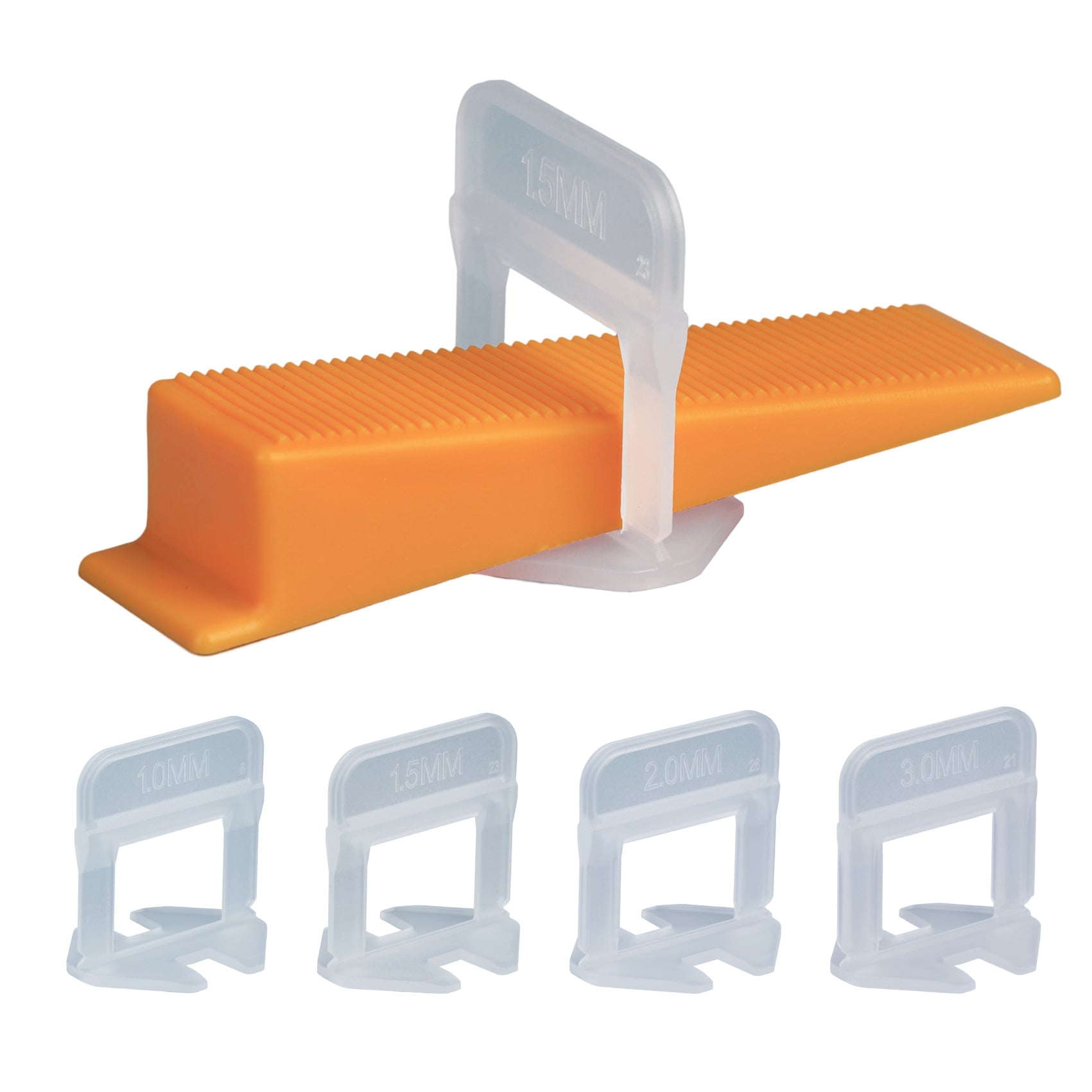
Tile Leveler Fundamentals: Components, Mechanics, and Role in Structural Integrity
How clips, caps, and wedges apply controlled downward pressure to eliminate lippage and maximize mortar contact
Clips anchor securely to the substrate; caps lock onto tile edges; and precision-engineered wedges interlock between them—generating consistent mechanical tension. This downward force presses tiles into uniform elevation during and throughout thin-set cure, eliminating edge height discrepancies before grouting. Crucially, it compresses the mortar bed to expel trapped air and ensure near-total contact—meeting the industry-standard minimum of 95% coverage for reliable adhesion. Unlike temporary alignment aids, this sustained compression transforms the installation from a surface-level adjustment into a structurally integrated system.
Why mechanical tension control—not just surface alignment—is essential for long-term bond integrity
Surface-alignment tools only correct tile position at a single moment—often before mortar begins curing. Tile levelers operate differently: they maintain calibrated downward pressure continuously, counteracting early-stage movement caused by foot traffic, thermal expansion, or substrate settling. This stability is critical for adhesive performance. As polymer chains in modern thin-sets cross-link during cure, even microscopic shifts can interrupt bond formation. Independent testing (CTI Labs, 2022) confirms installations using mechanical tension achieve up to 30% higher bond strength versus non-compressed controls—directly attributable to uninterrupted molecular bonding under load. The result is not just level tiles, but a monolithic assembly where tile, mortar, and substrate function as one cohesive unit.
Tile Leveler’s Critical Role in Preventing Voids and Ensuring Full Mortar Adhesion
How consistent pressure from the tile leveler minimizes air pockets and promotes uniform adhesive distribution
Consistent mechanical pressure forces thin-set to flow evenly across the entire tile back, displacing air and filling micro-irregularities in both tile and substrate. Without this action, localized high spots on the substrate create isolated voids—areas where mortar fails to make contact. These voids become stress concentrators, accelerating crack propagation and delamination over time. By actively squeezing out excess adhesive while maintaining full coverage, tile levelers help achieve the 95%+ mortar contact required by ANSI A108.5 for large-format and natural stone installations. This is especially vital for tiles larger than 15 inches, where minor gaps disproportionately increase deflection risk and long-term failure potential.
Enhanced polymer cross-linking and bond strength under sustained mechanical tension during cure
Sustained tension doesn’t merely hold tiles in place—it optimizes the chemical cure process. As thin-set transitions from paste to solid matrix, polymer networks form fragile initial bonds. Mechanical compression prevents micro-movement that would sever these nascent links, allowing cross-linking to proceed without disruption. This stable environment yields denser, more resilient mortar with superior tensile and shear resistance. Industry-standard pull-off tests show mechanically compressed installations consistently exceed ANSI A118.4 bond strength requirements by ≥25%, confirming that pressure isn’t ancillary—it’s catalytic to structural performance.
Long-Term Consequences of Skipping or Misusing Tile Leveler
Cracking, chipping, and grout failure linked to uncontrolled tile movement during adhesive cure
Omitting or misapplying tile levelers introduces unmanaged variables during the most vulnerable phase of installation: adhesive cure. Without sustained compression, tiles shift minutely under ambient loads—foot traffic, temperature swings, or vibration—creating permanent height deviations. These irregularities concentrate stress at grout joints and tile edges, initiating micro-fractures that evolve into visible cracks, chips, and hollow-sounding areas. Field data from the National Tile Contractors Association (NTCA Reference Manual, 2023) shows installations without mechanical leveling experience a threefold increase in grout joint failure and premature tile loosening—particularly in wet areas like bathrooms, where moisture infiltration through compromised joints accelerates substrate degradation. Repair costs for such failures average 3.2× higher than those for properly tensioned systems.
Substrate Preparation: The Non-Negotiable Foundation for Tile Leveler Efficacy
A tile leveler is a precision tool—not a corrective device. It cannot compensate for an uneven, weak, or contaminated substrate. Its function depends entirely on a foundation that is flat (within ±1/8" in 10 feet per ANSI A108.02), clean, dry, and structurally sound.
Self-leveling underlayment (SLU) or a properly cured mud bed is often essential to meet flatness tolerances—especially over concrete slabs or OSB subfloors. Installing levelers over an out-of-flat surface may force tiles into alignment at the expense of mortar contact, creating hidden voids that undermine adhesion and invite future failure. Likewise, dust, oil, laitance, or residual adhesives prevent thin-set from bonding effectively. No amount of mechanical tension can overcome poor interfacial adhesion. Proper preparation—verified with a straightedge and moisture meter—isn’t a preliminary step; it’s the first structural layer of the installation. Only on this verified base can the tile leveler fulfill its intended role: converting precise mechanical control into lasting dimensional and bond integrity.
FAQs
What is the primary purpose of a tile leveler?
A tile leveler applies consistent downward pressure to eliminate edge height discrepancies (lippage), ensure full mortar contact, and maintain alignment throughout the curing process, transforming the installation into a structurally integrated system.
Can tile levelers compensate for an uneven substrate?
No, tile levelers are precision tools designed to work on flat, clean, and structurally sound substrates. An uneven substrate must be corrected using methods like self-leveling underlayment before using tile levelers.
What happens if I don't use a tile leveler?
Skipping tile levelers can result in uneven tile placement and movement during adhesive curing, leading to cracking, chipping, grout failure, and expensive repairs.
Is sustained mechanical tension essential for tile installations?
Yes, it prevents micro-movement during the curing process, allowing polymer cross-linking for stronger adhesive bonds and a more stable installation.
Table of Contents
- Tile Leveler Fundamentals: Components, Mechanics, and Role in Structural Integrity
- Tile Leveler’s Critical Role in Preventing Voids and Ensuring Full Mortar Adhesion
- Long-Term Consequences of Skipping or Misusing Tile Leveler
- Substrate Preparation: The Non-Negotiable Foundation for Tile Leveler Efficacy
- FAQs
