 EN
EN

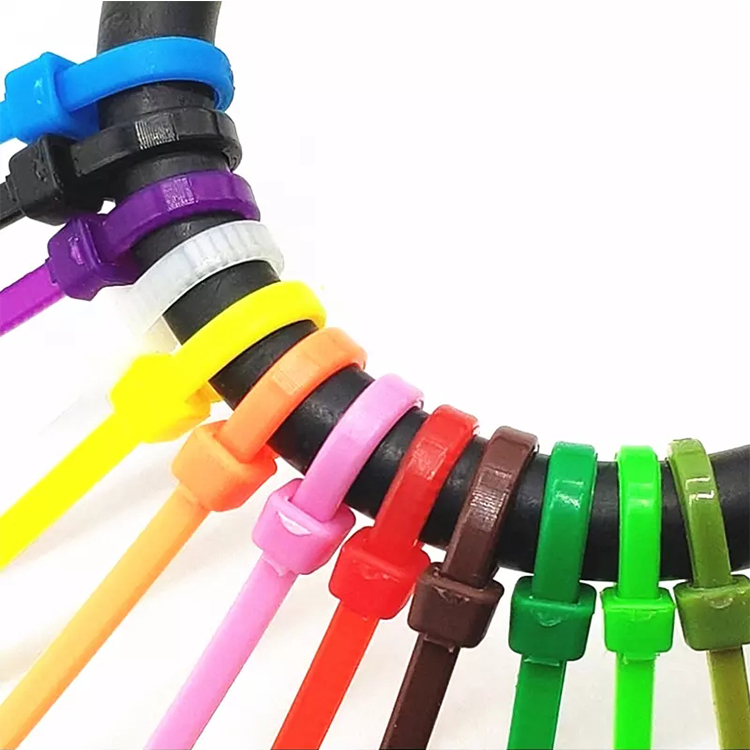
Over-Tightening Nylon Cable Tie: Damaging Cables and Violating Standards
Tightening a nylon cable tie too much is one of the most frequent installation errors. Excessive force crushes cable jackets, deforms internal conductors, and creates long-term reliability risks. This practice not only damages cables but also violates industry standards such as UL and IEC guidelines, which specify proper tension limits for different tie sizes.
Jacket Compression and Conductor Deformation: How Excess Tension Impairs Signal Integrity
When overtightened, a nylon cable tie compresses the outer insulation jacket—potentially pinching or cutting through it and exposing conductors to moisture, short circuits, and ground faults. Even without visible damage, sustained compression deforms internal conductors, altering impedance and causing signal reflections in data cables. The result is intermittent failures, data errors, and degraded system performance. Over-tightening also creates localized stress points that accelerate conductor fatigue—especially in dynamic environments. For critical applications like networking or industrial controls, maintaining proper tension is essential to preserve signal integrity and prevent costly downtime.
Measuring Correct Tension: UL/IEC Guidelines vs. Field “Snug-Feel” Misconceptions
Many technicians rely on a subjective “snug feel” to judge cable tie tension—a method that consistently leads to overtightening. UL and IEC standards recommend a precise, repeatable approach: optimal tightening force should be approximately half the cable tie’s rated loop tensile strength. For example, a 4.8 mm-wide nylon cable tie with a 222 N tensile rating should be tightened to about 111 N. Using a calibrated tensioning tool ensures compliance, protects cables and ties, and supports inspection readiness and long-term reliability.
Selecting the Wrong Nylon Cable Tie Size or Strength for the Application
Load Rating Mismatches: Why a 50 lb Tie Fails on Dynamic 30 lb Bundles
A common error is selecting a nylon cable tie based solely on static tensile strength while ignoring real-world dynamics. A tie rated at 50 lbs (≈222 N) under ideal lab conditions can fail rapidly when used on a bundle subjected to vibration, shock, or thermal cycling—even if the bundle weighs only 30 lbs. Dynamic loads impose repetitive stress that fatigues the locking mechanism and erodes safety margins. Matching ultimate strength to bundle weight alone ignores this reality. For dynamic applications, a minimum 2:1 safety factor is recommended. A 50 lb tie on a 30 lb dynamic bundle delivers only a 1.67:1 ratio—insufficient to prevent creep or eventual breakage. Always apply derating factors for environmental stress and select a tie whose rated strength significantly exceeds expected peak loads.
Length, Width, and Bundle Geometry: Avoiding Over-Bundling and Thermal Trapping
Selecting a tie that is too long or too wide for the cable bundle invites over-bundling—where excess strap material crowds cables and restricts airflow. This trapped heat accelerates insulation degradation and increases fire risk. For instance, a narrow bundle of 10 control cables may require only a 4-inch tie (2.5 mm width), yet using a 12-inch tie (4.8 mm width) forces multiple wraps, creating bulky lumps and impairing heat dissipation. Standard sizing tables assume a single-wrap configuration; overlapping reduces effective strength and worsens thermal buildup. Always measure the bundle’s circumference and choose a tie whose maximum diameter capacity matches it within 10–20% overcapacity—never more than double.
Ignoring Environmental Ratings: UV, Temperature, and Compliance Zones
Outdoor UV Exposure: Real-World Degradation of Standard Nylon Cable Tie Performance
Standard nylon 6/6 cable ties degrade rapidly under direct sunlight. Ultraviolet (UV) radiation breaks polymer chains, causing brittleness, discoloration, and loss of tensile strength. After just 12 months of outdoor exposure in moderate climates, standard ties can lose up to 50% of their original holding capacity. Accelerated UV testing per ASTM G154 replicates years of sun damage in weeks. Ties intended for outdoor use must carry a UV-stabilized rating—typically achieved with carbon black or other UV inhibitors added during extrusion. Without this protection, mechanical failure is nearly inevitable, leading to loose bundles, dropped cables, and code violations.
Plenum, Vibration, and Abrasion Environments: When Standard Nylon Cable Tie Isn’t Fit for Purpose
Environmental ratings extend well beyond UV resistance. In plenum air-handling spaces, standard nylon produces toxic smoke and fails flame-spread requirements during combustion. Plenum-rated alternatives—such as nylon 12 or fluoropolymer-based ties (e.g., Tefzel)—meet UL 94 V-0 and NFPA 262 standards. In high-vibration settings—like industrial machinery or vehicle wiring—standard ties gradually loosen; a 50-pound nominal tie may retain only ~70% of its grip after 100,000 vibration cycles. Abrasion resistance also varies significantly: sharp cabinet edges can cut untreated nylon in weeks. Selecting ties with the correct environmental rating (UV, temperature, flame, vibration, or abrasion) ensures long-term integrity and compliance. Always verify the manufacturer’s data sheet against the specific application zone’s requirements.
Improper Handling and Reuse of Nylon Cable Tie
Reusing a damaged nylon cable tie is a common but critical mistake. Even ties that appear intact may harbor micro-cracks from prior tensioning or environmental exposure. When re-tensioned, they can snap unexpectedly—causing bundle failure and safety hazards. Improper handling during installation also shortens service life: using non-calibrated tools often results in uneven tension or permanent deformation. Cutting the tail too short compromises the locking mechanism, increasing slippage risk. Exposure to harsh chemicals, solvents, or high humidity further degrades the plastic—even in unused stock. In industrial environments, store ties in sealed containers to prevent moisture absorption. Best practices include using a calibrated tensioning tool, leaving at least a finger-width gap between the tie and bundle, and inspecting each tie before reuse. Discard any tie showing discoloration, cracking, or brittleness immediately. Consistent handling discipline extends system life and maintains regulatory compliance.
FAQ
Why is over-tightening nylon cable ties problematic?
Over-tightening nylon cable ties can damage cables, deform conductors, create reliability risks, and violate industry standards like UL and IEC guidelines.
How can over-tightened cable ties affect signal integrity?
Sustained compression can deform internal conductors, alter impedance, cause signal reflections, and lead to intermittent failures in data cables.
What is the correct tension for nylon cable ties?
The optimal tightening force should be approximately half the cable tie’s rated loop tensile strength. Using a calibrated tensioning tool helps ensure compliance.
How does UV exposure affect nylon cable ties?
Ultraviolet radiation breaks polymer chains in standard nylon ties, causing brittleness, discoloration, and loss of tensile strength over time.
Can nylon cable ties be reused?
No, reused ties may have micro-cracks from prior use or environmental exposure, leading to potential snap failure and safety hazards.
