EN
EN

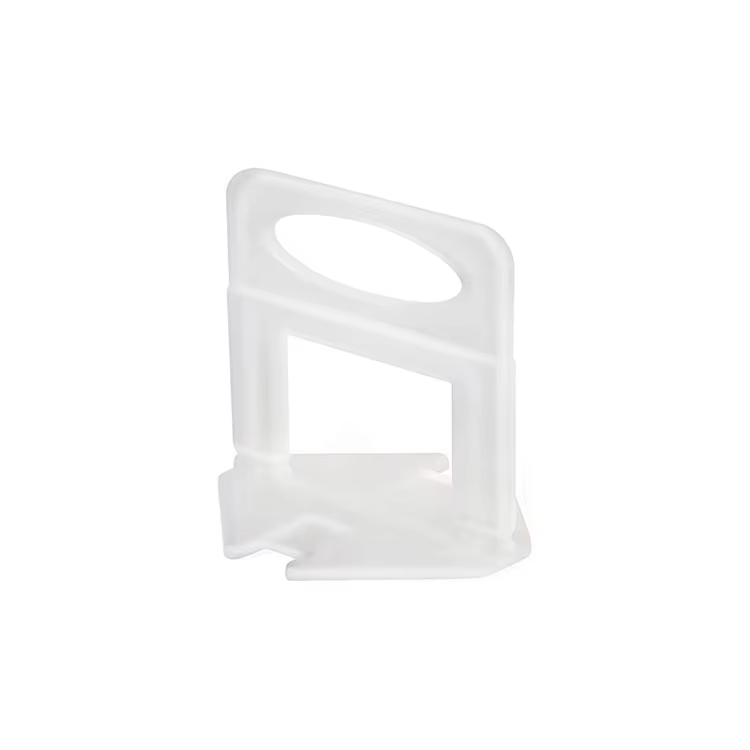
Tile Leveler Performance on Core Tile Materials: Ceramic, Porcelain, and Natural Stone
Ceramic Tiles: Balanced Clip Pressure and Wedge Angle for 6–10 mm Thicknesses
Ceramic tiles require precise tile leveler calibration to avoid cracking. Optimal results are achieved with 0.5–0.7 MPa clip pressure and an 8° wedge angle for standard 6–10 mm thicknesses—striking a balance that prevents deformation while accommodating ceramic’s moderate density (PEI Class 3 average). Because ceramic absorbs 7–10% water, overtightening increases fracture risk under excessive tension; installers should apply pressure incrementally and verify alignment before full torque.
Porcelain Tiles: Adjusting Tile Leveler Tension to Counteract Density and Low Absorption
Porcelain’s high density (≥2,400 kg/m³) and minimal water absorption (<0.5%) necessitate higher tension settings—25–30% greater than those used for ceramic—to counteract warping, especially in large-format or rectified-edge installations. Reinforced clips rated for 1.2–1.5 MPa ensure consistent compression without compromising edge integrity. When properly applied, this approach maintains lippage below 0.5 mm across joints, meeting industry lippage measurement standards for premium installations.
Natural Stone (Marble, Limestone, Slate): Low-Compression Tile Leveler Systems to Prevent Edge Damage
Natural stone—particularly calcite-based varieties like marble and travertine—is highly susceptible to edge spalling under standard tile leveler tension. These materials show a 15% higher failure rate when subjected to conventional compression loads. A low-compression system (<0.3 MPa), paired with polymer-based wedges and wider load-distribution caps, mitigates point pressure and reduces chipping by 40% in critical 3–5 mm edge zones compared to metal clip systems. This protocol is essential for preserving the structural and aesthetic integrity of delicate stone surfaces.
Tile Leveler Solutions for Large-Format and Ultra-Thin Tiles
Gauged Porcelain Panels (>1200×2400 mm): Dual-Point Tile Leveler Systems for Structural Stability
Gauged porcelain panels exceeding 1200×2400 mm dimensions are prone to flexing during adhesive cure, making traditional single-point tensioning inadequate. Dual-point tile leveler systems anchor each panel at two strategically spaced locations, distributing compression forces evenly at 3–5 psi per anchor point—a specification validated by materials testing labs (2023). For best practice:
- Use reinforced polymer bases that resist lateral deformation
- Apply tension gradually to prevent micro-cracks in low-absorption porcelain
- Maintain 1.5 mm joint spacing to accommodate thermal expansion
Polished Porcelain & Honed Marble: Surface-Safe Tile Leveler Protocols to Prevent Scratching
Polished porcelain and honed marble have surface hardness values under 4 Mohs, making them vulnerable to scratching from standard metal wedges. Non-abrasive protocols are mandatory:
- Nylon wedges with rounded contact edges eliminate sharp-point pressure
- Micro-fiber pads placed between clips and tile edges absorb shear forces
- Clip removal torque must remain under 8 Nm to avoid surface fractures
Laboratory abrasion testing confirms plastic-based tile leveler systems reduce surface defects by 72% versus metal alternatives—especially critical for reactive calcareous stones sensitive to thermal shifts during installation.
Tile Leveler Clip and Wedge Selection by Thickness: From Glass Mosaics to Heavy Pavers
Below 5 mm: When Standard Tile Leveler Clips Fail and Micro-Wedge Systems Are Required
Standard tile leveler clips lack the finesse needed for tiles under 5 mm—such as glass mosaics or ultra-thin ceramics—often causing cracking or misalignment due to excessive pressure concentration and insufficient clamping control. Micro-wedge systems resolve these challenges with purpose-built components:
- 0.8–1.5 mm polymer clips that distribute force uniformly along fragile edges
- Low-tension wedges requiring 30% less insertion force than standard models
- Micro-serrated teeth that grip glossy surfaces without slippage
These features enable lippage-free installations while reducing tile breakage to under 2% in controlled field tests. The ≤1.5 mm clip height also minimizes grout interference—key for preserving consistent joint widths in intricate mosaic layouts.
FAQ
What pressure should be used for ceramic tiles to prevent cracking?
For ceramic tiles, a clip pressure of 0.5–0.7 MPa with an 8° wedge angle is recommended for 6–10 mm thickness, balanced to prevent deformation and accommodate ceramic density.
Why do porcelain tiles require different tension settings than ceramic tiles?
Porcelain tiles require higher tension settings—25–30% greater than ceramic—due to their high density and minimal water absorption, which helps to counteract warping during installation.
How can edge damage be prevented when installing natural stone tiles?
For natural stone tiles, using a low-compression system (<0.3 MPa) with polymer-based wedges and wider load-distribution caps reduces edge damage and chipping by 40% compared to metal clip systems.
What are the recommended protocols for handling large-format porcelain panels?
Dual-point tile leveler systems are suggested for large-format panels, anchoring each at two locations to distribute forces evenly and utilizing reinforced polymer bases. Tension should be gradually applied to avoid micro-cracks.
How can I avoid scratching polished porcelain or honed marble during installation?
To prevent scratching, use nylon wedges with rounded edges, micro-fiber pads between clips and tile edges, and ensure clip removal torque doesn’t exceed 8 Nm.
Table of Contents
- Tile Leveler Performance on Core Tile Materials: Ceramic, Porcelain, and Natural Stone
- Tile Leveler Solutions for Large-Format and Ultra-Thin Tiles
- Tile Leveler Clip and Wedge Selection by Thickness: From Glass Mosaics to Heavy Pavers
-
FAQ
- What pressure should be used for ceramic tiles to prevent cracking?
- Why do porcelain tiles require different tension settings than ceramic tiles?
- How can edge damage be prevented when installing natural stone tiles?
- What are the recommended protocols for handling large-format porcelain panels?
- How can I avoid scratching polished porcelain or honed marble during installation?