EN
EN

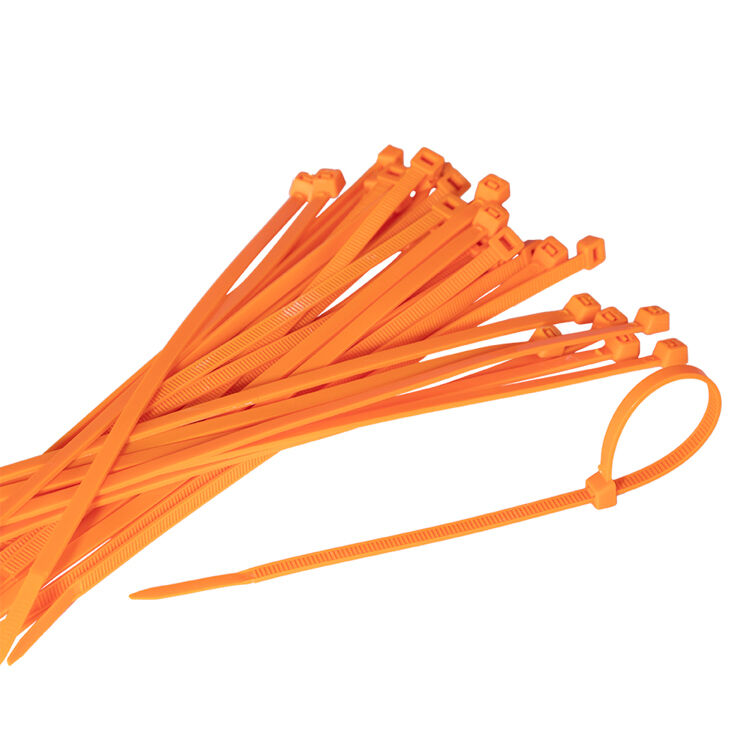
Why High Temperature Nylon Cable Ties Deliver Superior Performance and ROI
Thermal Stability Beyond 120°C: How Nylon 6/6 and PPA Resist Degradation
Standard nylon 6 cable ties degrade rapidly above 120°C due to hydrolysis and chain scission—but high-temperature variants engineered from Nylon 6/6 or polyphthalamide (PPA) maintain structural integrity far beyond this threshold. Nylon 6/6 offers a melting point of 255°C and low water absorption (1.5–2.8%), significantly reducing embrittlement in hot, humid environments. PPA extends continuous-use ratings to 260°C while preserving stiffness and electrical insulation—critical for applications like industrial ovens, engine bays, and drying equipment where thermal stress is constant.
Mechanical Integrity Under Thermal Cycling: Evidence from UL 94 and ASTM D638
Repeated thermal cycling induces fatigue, loss of tensile strength, and premature brittleness in conventional plastics. Per UL 94 and ASTM D638 testing, high-temperature nylon cable ties retain over 85% of their initial tensile force after 1,000 cycles between −40°C and 150°C. Their UL 94 V-0 flame rating confirms reliable self-extinguishing behavior—even after prolonged hot aging—making them suitable for electric bus charging systems and industrial autoclaves where thermal shock demands robust mechanical and fire safety performance.
Total Cost of Ownership Advantage: 3.2× Lower TCO in EV Powertrain and Industrial Control Applications
| Cost Factor | Standard Nylon 6 Tie | High Temperature Nylon 6/6 Tie |
|---|---|---|
| Replacement frequency per year | 4–5 | 1 |
| Labor cost per replacement | $25 | $25 |
| Annual material cost (1000 units) | $80 | $120 |
| Downtime cost per failure | $340 | $0 |
| 3-Year TCO per 1000 ties | $4,020 | $1,260 |
By resisting heat-induced loosening, moisture absorption, and vibration-driven fatigue, high-temperature nylon cable ties eliminate unscheduled maintenance and emergency service calls. EV powertrain assemblers and control-panel manufacturers realize a 3.2× lower total cost of ownership—offsetting the higher unit price through reduced rework, leaner spare-part inventories, and predictable long-life performance.
How to Select the Right High Temperature Nylon Cable Tie for Your Application
Material Comparison: Nylon 6/6 vs. Nylon 4/6 vs. Polyphthalamide (PPA) for HDT, Creep, and Chemical Resistance
Material selection hinges on matching polymer properties to operational demands. Nylon 6/6 delivers an HDT near 120°C (240°F) and balanced creep resistance—ideal for moderate industrial settings. Nylon 4/6 raises continuous-use capability to 150°C (285°F), with lower moisture uptake that sustains dimensional stability under humidity. For extreme conditions up to 185°C (365°F), PPA provides superior stiffness retention—nearly 40% higher than Nylon 6/6 after prolonged thermal exposure—and resists aggressive solvents and oils that cause swelling in standard nylons. In standardized 1,000-hour creep tests at 150°C, PPA shows less than 0.5% elongation versus 2.1% for Nylon 6/6. Engineers should map operating temperature, chemical exposure, and required load life to avoid over-specification while ensuring reliability.
Certification Essentials: UL Recognition, RoHS Compliance, and Flame Ratings for Aerospace and Rail
Certifications are non-negotiable gateways to safety-critical sectors. For aerospace and rail, UL 94 V-0 or V-2 flame rating is mandatory to limit fire propagation. UL 746C further validates long-term thermal aging—ties tested at 130°C for 7,000 hours without cracking meet typical aircraft interior requirements. RoHS compliance ensures absence of restricted substances like cadmium and lead, satisfying EU and many global regulatory baselines. Rail applications often require EN 45545-2 certification, which governs smoke density and toxicity during combustion. Always verify third-party test reports—not just datasheet claims—to ensure supply chain compliance and audit readiness.
Installation and Handling Best Practices for Long-Term Reliability
Proper installation directly determines service life. Avoid over-tightening, which creates localized stress points that accelerate creep—especially under thermal cycling. Use a calibrated tensioning tool to apply consistent, controlled force within the tie’s rated tensile strength. Route ties away from sharp edges or abrasive surfaces; add protective sleeving or edge guards when bundling near metal chassis or cutouts. For outdoor or washdown use, confirm the material—Nylon 6/6 or PPA—offers proven UV and chemical resistance. Trim the tail flush with the head to prevent snagging, and never bend the tie below its minimum loop diameter. During routine maintenance, inspect for discoloration, microcracking, or loosening. Replace any degraded tie immediately: failure in a high-temperature zone risks cascading system downtime.
Innovations Shaping the Future of High Temperature Nylon Cable Ties
Reinforced Formulations: Glass-Filled and Carbon-Filled Nylon for Enhanced Strength at 150°C
Glass- and carbon-fiber reinforcement is elevating performance ceilings. Glass-filled high-temperature nylon cable ties significantly reduce creep under sustained loads, while carbon-filled versions deliver improved rigidity and electrostatic dissipation—valuable in automotive harnesses and aerospace wiring where EMI control and weight savings matter. Both formulations retain dimensional stability across repeated thermal cycles, extending service life in demanding environments like engine compartments and industrial ovens—without compromising cost-effectiveness or manufacturability.
Smart Integration Trends: Embedded Sensors and RFID-Enabled High Temperature Nylon Cable Ties
The next evolution integrates intelligence directly into the fastener. Emerging smart cable ties embed miniature temperature sensors or passive RFID tags within the high-temperature nylon matrix—enabling real-time monitoring of thermal profiles, vibration signatures, or fastener integrity inside sealed assemblies. These capabilities support predictive maintenance strategies in data centers, wind turbine nacelles, and rail traction systems. As Industry 4.0 adoption accelerates, sensor-integrated cable management will transition from innovation to infrastructure standard—transforming passive bundling into active asset intelligence.
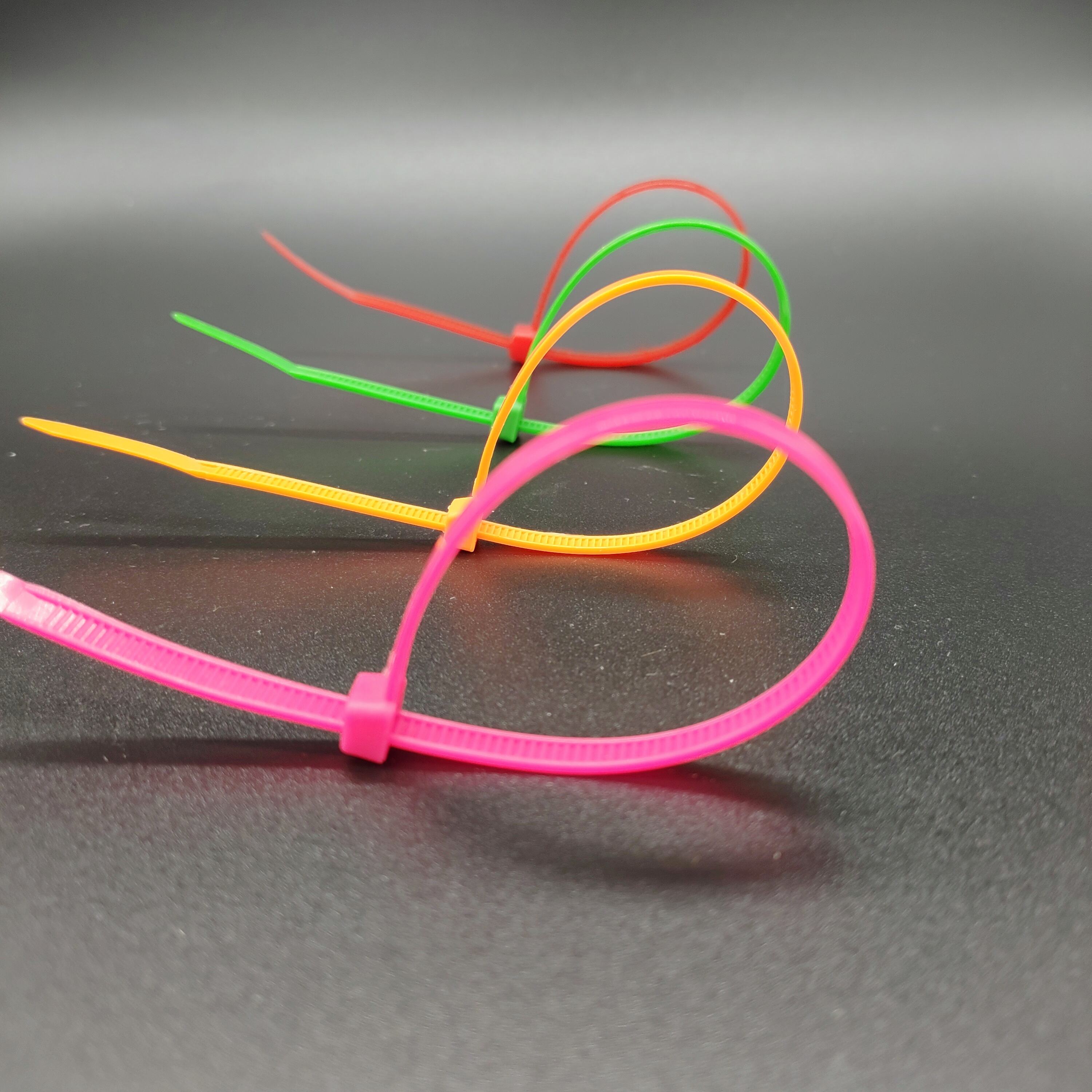
FAQ: High Temperature Nylon Cable Ties
What makes high-temperature nylon cable ties different from standard nylon ties?
High-temperature nylon cable ties are engineered to resist structural degradation, thermal embrittlement, and moisture absorption at elevated temperatures beyond 120°C, unlike standard nylon ties that degrade rapidly under such conditions.
What materials are used in high-temperature nylon cable ties?
High-temperature variants are commonly made from Nylon 6/6, Nylon 4/6, or Polyphthalamide (PPA) for their excellent thermal resistance, mechanical stability, and low water absorption properties.
How are reinforced formulations like glass-filled or carbon-filled nylon ties advantageous?
Glass-filled and carbon-filled nylon ties significantly enhance strength, rigidity, and creep resistance, particularly in demanding environments like engine bays and industrial applications.
What certifications should I look for when selecting high-temperature nylon cable ties?
Look for UL 94 flame ratings, UL 746C for thermal aging, RoHS compliance for restricted substances, and specialized certifications like EN 45545-2 for rail and aerospace applications.
What best practices should be followed during installation?
Avoid over-tightening to prevent localized stress, use a calibrated tensioning tool, and locate ties away from sharp or abrasive edges. Regular inspections and quick replacements of degraded ties are vital for reliability.
Table of Contents
- Why High Temperature Nylon Cable Ties Deliver Superior Performance and ROI
- How to Select the Right High Temperature Nylon Cable Tie for Your Application
- Installation and Handling Best Practices for Long-Term Reliability
- Innovations Shaping the Future of High Temperature Nylon Cable Ties
-
FAQ: High Temperature Nylon Cable Ties
- What makes high-temperature nylon cable ties different from standard nylon ties?
- What materials are used in high-temperature nylon cable ties?
- How are reinforced formulations like glass-filled or carbon-filled nylon ties advantageous?
- What certifications should I look for when selecting high-temperature nylon cable ties?
- What best practices should be followed during installation?