EN
EN

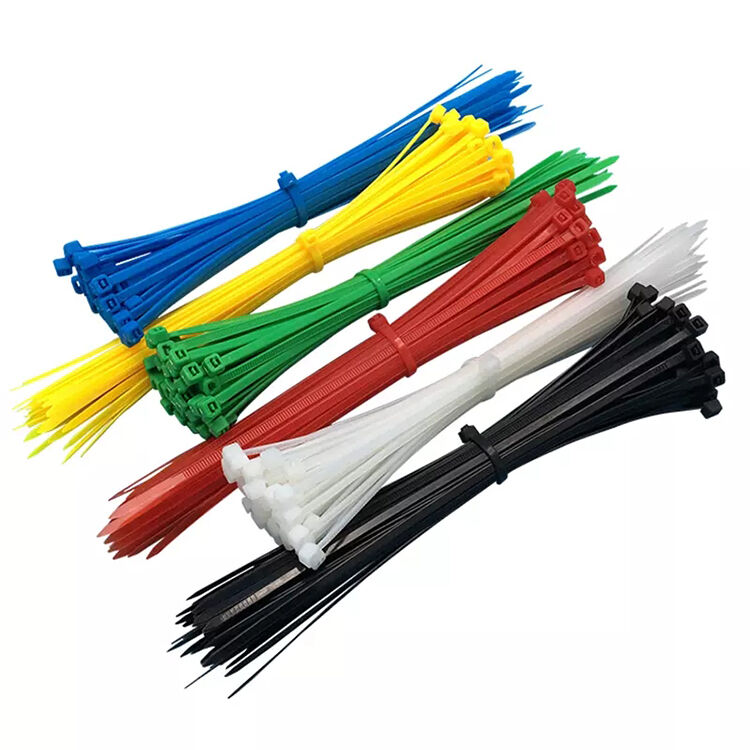
Understand Nylon Cable Tie Anatomy and How the Ratchet Mechanism Works
Pawl-and-ratchet design: Why one-way tensioning prevents slippage
The nylon cable tie relies on a precision pawl-and-ratchet mechanism housed within its head. As the strap’s tail is threaded through, a spring-loaded pawl—a small, angled cantilever—engages with the linear teeth along the strap. This creates a mechanical one-way lock: tension pulls the strap tighter while the pawl physically blocks backward motion. Unlike friction-dependent fasteners, this interlocking action maintains consistent clamping force under vibration, thermal cycling, or sustained load—eliminating slippage without tools or secondary locking features.
How nylon material thickness and tooth geometry impact long-term grip retention
Durability hinges on both material integrity and micro-geometry. Standard nylon 6.6 cable ties use straps ≥0.5 mm thick to resist creep and deformation under load; thinner variants risk premature yielding. Tooth width, depth, and spacing are engineered to maximize pawl engagement surface area and distribute stress evenly across the ratchet interface. Shallow, inconsistent, or worn teeth reduce effective contact and accelerate fatigue—especially in high-cycle or outdoor applications. UV-stabilized nylon (e.g., with HALS additives) further preserves tensile strength and tooth rigidity when exposed to sunlight, extending functional life from 1–2 years (standard nylon) to 7–9 years in direct UV environments.
Install Nylon Cable Tie Correctly for Maximum Security and Zero Damage
Looping fundamentals: Avoid kinking, twisting, or double-looping under load
Begin installation by positioning the tie so the head sits flat against the bundle surface—never bent, twisted, or elevated. Kinking or twisting introduces localized stress concentrations that can initiate cracking or premature tooth failure. Double-looping (passing the tail twice through the head) disrupts proper pawl engagement and compromises the ratchet’s mechanical advantage, increasing slip risk under dynamic loads. Instead, thread the tail straight through once, remove slack gently, and cinch evenly before final tightening. This preserves the integrity of the locking interface and ensures uniform compression across the bundle.
Optimal tightening: Torque guidelines by width to prevent nylon deformation
Over-tightening is a leading cause of nylon cable tie failure—it deforms teeth, stresses the pawl beyond elastic limits, and may crush or distort underlying cables. Adhere to these UL-validated torque limits for nylon 6.6 ties:
| Tie Width | Maximum Recommended Torque |
|---|---|
| 2.5 mm | ≤ 1.8 N·m |
| 3.6 mm | ≤ 2.5 N·m |
| 4.8 mm | ≤ 3.4 N·m |
| 7.6 mm | ≤ 5.1 N·m |
Use a calibrated tensioning tool where possible. When hand-tightening, stop as soon as the bundle is fully seated with no visible gaps—and before the strap begins to visibly compress or “neck down” near the head. This balance ensures secure retention while protecting both the tie and the cables it secures.
Choose the Right Nylon Cable Tie Type for Your Application
Matching tensile strength to real-world loads: UL 62275 data across standard sizes (18–250 lbs)
Tensile strength must align with actual mechanical and environmental demands—not just bundle size. Per UL 62275, breaking strength varies predictably by length and cross-section: a 4-inch, 2.5 mm-wide tie typically breaks at ~18 lbs, whereas a 48-inch, 7.6 mm-wide industrial tie achieves up to 250 lbs. Always select a tie rated at least 1.5× your peak expected load to accommodate shock, vibration, or thermal expansion. Confirm ratings using the manufacturer’s UL 62275-compliant datasheet—not generic marketing claims—to ensure traceable, standardized performance.
When to upgrade: UV-resistant, high-temp, or stainless-steel-reinforced nylon cable tie variants
Standard nylon 6.6 performs reliably indoors up to 185°F (85°C), but degrades rapidly outdoors or in harsh settings. For UV exposure, specify UV-stabilized nylon—tested to ASTM D4329 or ISO 4892-3—with proven 7–9 year service life in full-spectrum sunlight. In high-heat environments (e.g., engine bays or near HVAC ducts), choose heat-stabilized grades rated for continuous operation up to 239°F (115°C). In food, pharmaceutical, or chemical processing facilities, stainless-steel-reinforced nylon ties offer corrosion resistance and metal detectability—critical for HACCP compliance and contamination control. Match the variant to your site’s dominant stressors: UV intensity, ambient temperature profile, and chemical exposure history.
Avoid Costly Nylon Cable Tie Mistakes That Compromise Safety and Reliability
Even experienced technicians can undermine reliability through avoidable errors—particularly during finalization. Two critical missteps consistently appear in field audits: improper tail trimming and excessive tightening. Correcting both safeguards personnel, equipment, and long-term performance.
Cutting excess length safely: Why flush-cutters—not scissors—prevent sharp edges and snags
Trimming the tail after tightening is essential—but tool choice matters. Scissors or standard side cutters often leave jagged, pointed ends that pose laceration risks and can snag on adjacent wiring, insulation, or moving parts. Worse, an uneven cut may create a lever arm that applies torsional stress to the head, gradually loosening the pawl engagement. Flush-cutters deliver a clean, perpendicular shear—minimizing protrusion and eliminating sharp burrs. Cut as close to the head as possible without contacting the ratchet housing to preserve structural integrity and reduce snag potential.
The over-tightening trap: How excessive force deforms nylon teeth and increases slippage risk
Contrary to intuition, overtightening weakens the very mechanism designed to secure the bundle. Exceeding the recommended torque (e.g., >1.8 N·m for a 2.5 mm tie) permanently deforms the ratchet teeth and compresses the pawl spring beyond recovery. This reduces holding force, accelerates wear, and increases the likelihood of sudden slippage—even under static loads. Proper tension is defined not by resistance, but by outcome: the bundle is immobile, cables remain uncompressed, and the strap shows no visible distortion near the head. When in doubt, prioritize retention over rigidity—reliability lies in controlled, repeatable tension—not maximum force.
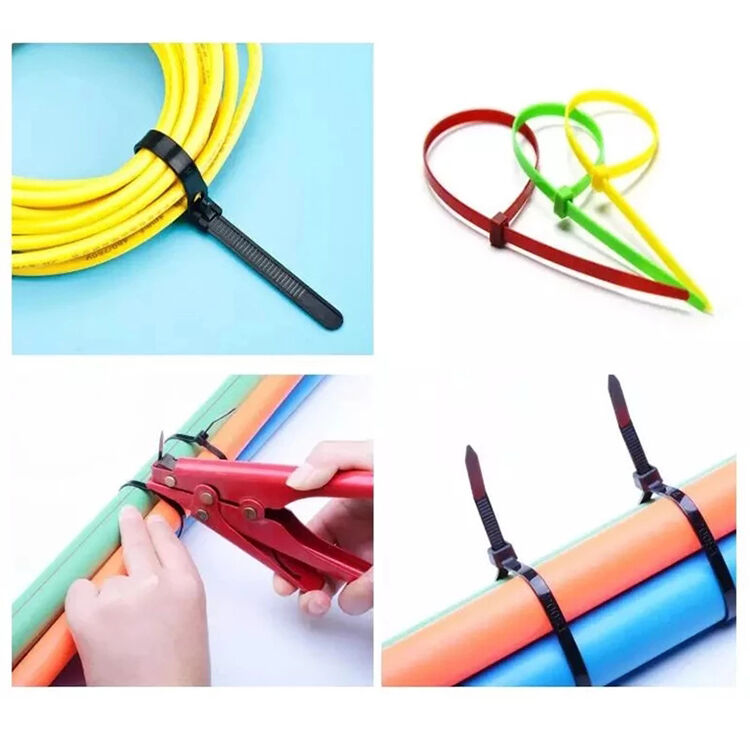
FAQ
What does the pawl-and-ratchet mechanism in nylon cable ties do?
The pawl-and-ratchet mechanism creates a one-way lock that holds the strap securely in place, preventing backward motion and slippage under tension.
Why is material thickness important for nylon cable ties?
Thicker nylon material helps resist deformation and maintain grip under load. Thin straps can yield prematurely, reducing long-term durability.
How can I prevent damage during nylon cable tie installation?
Avoid kinking, twisting, or double-looping the tie during installation. Position the head flat against the bundle surface and adhere to recommended torque guidelines.
What torque should I apply for different nylon cable tie widths?
Use the following maximum torques: 2.5 mm - ≤ 1.8 N·m, 3.6 mm - ≤ 2.5 N·m, 4.8 mm - ≤ 3.4 N·m, and 7.6 mm - ≤ 5.1 N·m.
When should I consider special cable tie variants?
For UV exposure, use UV-stabilized ties. For high-heat environments, opt for heat-stabilized ties. Stainless steel-reinforced ties are ideal for corrosion resistance and HACCP compliance.
What’s the best way to trim excess tail length from a cable tie?
Use flush-cutters to avoid leaving sharp edges or stress points that can weaken the tie or cause injury.
Table of Contents
- Understand Nylon Cable Tie Anatomy and How the Ratchet Mechanism Works
- Install Nylon Cable Tie Correctly for Maximum Security and Zero Damage
- Choose the Right Nylon Cable Tie Type for Your Application
- Avoid Costly Nylon Cable Tie Mistakes That Compromise Safety and Reliability
-
FAQ
- What does the pawl-and-ratchet mechanism in nylon cable ties do?
- Why is material thickness important for nylon cable ties?
- How can I prevent damage during nylon cable tie installation?
- What torque should I apply for different nylon cable tie widths?
- When should I consider special cable tie variants?
- What’s the best way to trim excess tail length from a cable tie?