 EN

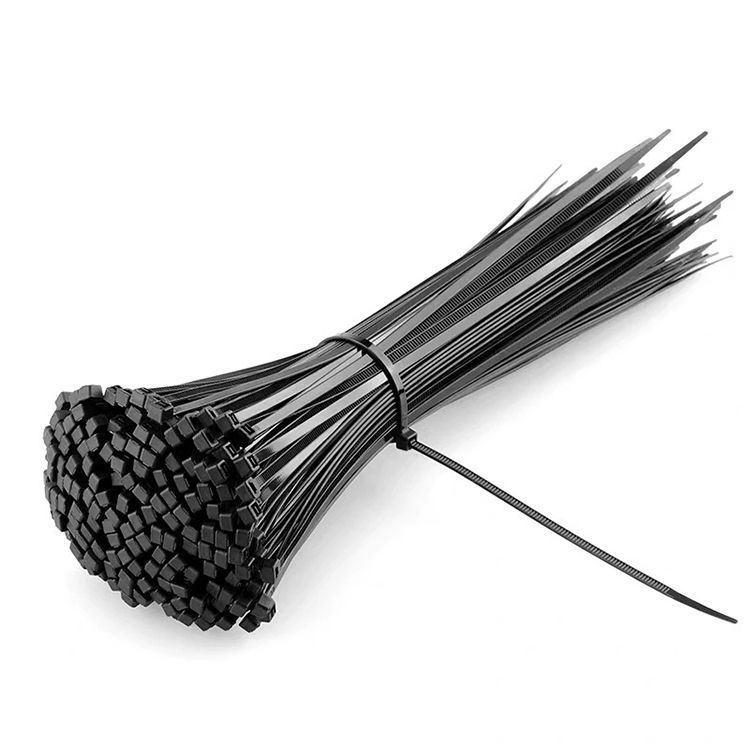
Superior Mechanical Performance for Automotive Wiring Harnesses
Nylon cable ties deliver exceptional mechanical stability for automotive wiring harnesses, where secure bundling directly prevents electrical failures. Their high tensile strength and controlled flexibility enable consistent clamping force without damaging wire insulation—critical in environments with thousands of connection points. By preventing loosening under dynamic loads, they mitigate a leading cause of in-vehicle electrical faults. Vehicle manufacturers rely on this balance of robustness and ease-of-use to protect wire integrity while streamlining assembly across complex architectures.
Precision Routing and Space Optimization in Dense Harness Assemblies
Modern vehicle platforms demand precise wire routing through increasingly confined spaces—especially around hot engine components and moving assemblies. Nylon cable ties support low-profile, organized bundling that follows engineered pathways, reducing chafing risks and mechanical interference. In high-density zones like fuse boxes and control modules, their slim profile consolidates multiple circuits into compact, serviceable units. Well-organized harnesses using nylon ties can reduce required installation space by up to 30% compared to unsecured wiring, based on SAE International 2022 time-motion studies. Crucially, the consistent tension maintains exact routing geometry over time—preventing wires from migrating into hazardous proximity with heat sources or moving parts during the vehicle’s service life.
Vibration Resistance and Fatigue Life Under Cyclic Mechanical Loads
Vehicles generate broad-spectrum vibration from engines, road surfaces, and drivetrains—energy that, if transmitted unchecked, accelerates conductor fatigue and insulation wear. Nylon cable ties absorb and dampen these vibrations rather than rigidly transmitting them, protecting conductors from work-hardening and eventual fracture. Research from the Automotive Reliability Consortium (2023) shows properly secured harnesses using nylon cable ties exhibit a 40% reduction in vibration-induced conductor fatigue versus unsecured or poorly retained wiring. Their viscoelastic behavior ensures clamping force remains stable across thermal expansion cycles—a key advantage over metal fasteners prone to loosening. This resilience is especially vital with electrification, as inverters and electric motors introduce new high-frequency excitations; robust mechanical retention is now foundational to long-term reliability.
Thermal, Chemical, and Environmental Resilience of Nylon Cable Tie
Heat-Stabilized Nylon 66 Performance Across Automotive Temperature Ranges (−40°C to +125°C)
Automotive applications subject fasteners to extreme thermal cycling—from sub-zero cold starts to sustained exposure near exhaust manifolds. Standard nylon softens above 85 °C, but heat-stabilized nylon 66 incorporates thermal-oxidative stabilizers and reinforcement to extend continuous operation to 125 °C. At the low end, it retains ductility and impact resistance down to −40 °C, eliminating brittle fracture risks during winter assembly or operation. Accelerated aging tests confirm heat-stabilized nylon 66 retains over 90% of its initial tensile strength after 1,000 hours at 125 °C—far exceeding standard grades, which often drop below 50% within 500 hours (polymer durability studies 2024). Its stabilized molecular structure suppresses free-radical degradation, preserving elongation at break and secure grip—even after repeated thermal cycling—thereby preventing harness sag, chafing, and shorts in high-heat zones like EGR systems and turbocharger plumbing.
Resistance to Fuel, Oil, Coolant, and Brake Fluid Exposure
In-service cable ties must withstand incidental contact with aggressive fluids without swelling, cracking, or losing strength. Nylon 66 exhibits less than 3% volume swell after 24-hour immersion in SAE 10W-30 oil, common coolants, and diluted brake fluid at 100 °C—significantly outperforming polypropylene, which swells over 6% under identical conditions. Heat-stabilized grades further reduce swell to under 1.5%, maintaining dimensional stability and clamping force even after prolonged exposure in engine bays and transmission tunnels. Its semi-crystalline structure provides inherent hydrocarbon barrier properties, resisting softening or tackiness from diesel or gasoline vapors. Compatibility with zinc-free coolants and DOT-4 brake fluid eliminates the need for secondary protective sleeves—reducing part count and assembly time. Long-term hot-oil aging studies show heat-stabilized nylon ties retain more than 85% of initial loop tensile strength after 3,000 hours, validating their reliability in fuel-line routing and sensor-harness clamping.
Regulatory Compliance and Long-Term Reliability Assurance
UL 94 V-0 Flame Retardancy, RoHS, and REACH Compliance for Safety-Critical Zones
Flame retardancy is non-negotiable in engine compartments and EV battery housings, where electrical faults contribute to nearly 20% of vehicle fires (NFPA). Automotive-grade nylon 66 is formulated to meet UL 94 V-0—the highest flame-retardant rating for plastics—extinguishing within 10 seconds of flame removal and producing no flaming drips. This certification is mandatory for fixings near fuel lines, high-current cables, and power electronics. Full RoHS compliance ensures absence of lead, mercury, and other hazardous substances, while REACH verification confirms no intentionally added substances of very high concern. Together, these standards guarantee safety, environmental integrity, and functional reliability over a vehicle’s full 10–15 year service life.
Cost-Efficiency and Scalable Manufacturing Integration
Nylon cable ties deliver the lowest total installed cost among wiring harness fasteners—driven by minimal material expense and rapid application. A 2023 industry benchmark (Cable Management in Automotive Manufacturing Report) found a standard nylon tie costs ~$0.02, compared to $0.08 for reusable clips and $0.04–$0.06 for adhesive tape anchors. With installation time under 2 seconds per tie—versus 5–8 seconds for clips—labor cost per connection falls by 60%. For a harness with 60 routing points and a $0.50/min labor rate, this translates to a $1.20 per-vehicle saving. Over an annual production run of 250,000 units, the substitution yields $300,000 in direct cost reduction—without engineering changes.
| Fastener Type | Part Cost (Avg.) | Installation Time | Total Cost per 60 Points* |
|---|---|---|---|
| Nylon cable tie | $0.02 | 2 seconds | $2.70 |
| Plastic clip | $0.08 | 7 seconds | $8.30 |
| Adhesive tape anchor | $0.05 | 6 seconds | $5.50 |
*Based on a $0.50/min labor rate; includes material and labor only.
Beyond unit economics, nylon cable ties integrate seamlessly into high-speed automated lines. Modern application tools install, tension, and trim a tie in under 1.5 seconds—achieving repeatable quality at 800–1,200 parts/hour without operator fatigue. This scalability is essential as circuit counts rise: today’s mid-segment sedans contain over 1,500 individual wires, each requiring reliable fixation. Lightweighting adds further value—nylon ties average just 0.3 grams each. Replacing metal clamps across a full harness reduces vehicle mass by 0.5–1.2 kg, improving CO₂ emissions by ~0.3 g/km and supporting CAFE compliance. These compounding advantages—low upfront cost, automation readiness, and downstream fuel savings—make nylon cable ties indispensable for profitable, high-volume automotive manufacturing.
FAQ
Why are nylon cable ties superior for automotive wiring harnesses?
Nylon cable ties offer high tensile strength, controlled flexibility, and vibration resistance. They prevent loosening under dynamic loads, ensuring wire integrity and minimizing electrical faults.
How do nylon cable ties optimize space in dense harness assemblies?
They provide low-profile, secure bundling that reduces required installation space by up to 30%. This helps maintain routing geometry and avoids chafing or interference in confined areas.
Can nylon cable ties withstand extreme temperatures?
Yes, heat-stabilized nylon 66 functions effectively across −40°C to +125°C, retaining tensile strength and ductility even after prolonged thermal cycling.
Are nylon cable ties resistant to automotive fluids?
Heat-stabilized nylon 66 resists swelling and degradation from fuel, oil, coolants, and brake fluids, ensuring reliability in demanding engine bay environments.
What certifications do nylon cable ties meet for safety?
Automotive-grade nylon 66 adheres to UL 94 V-0 flame retardancy, RoHS, and REACH standards, guaranteeing long-term safety in critical zones.
