 EN
EN

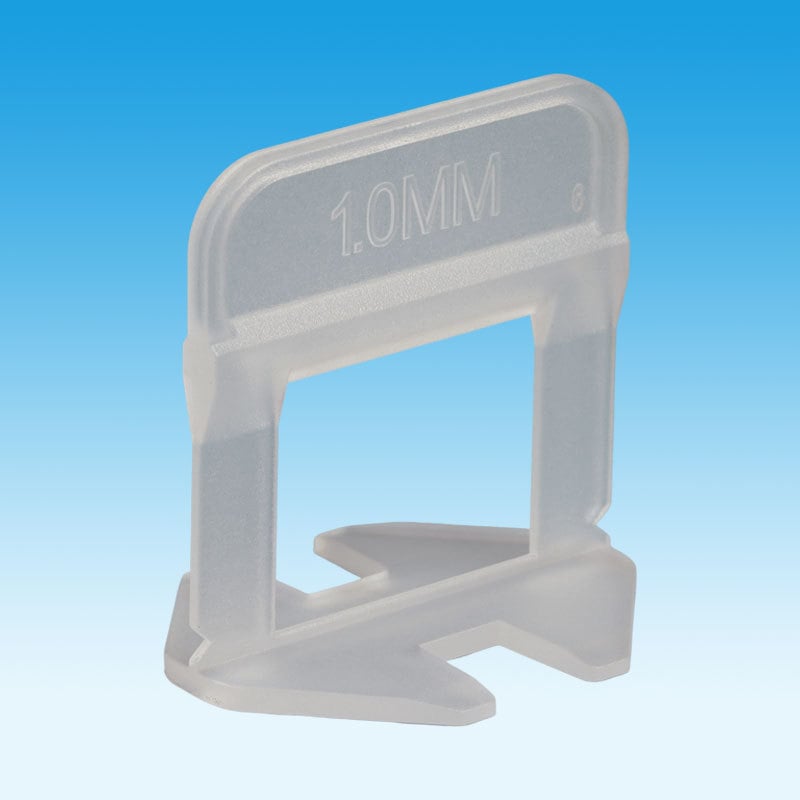
Eliminating Lippage: The Core Reason Professionals Choose Tile Leveler
How lippage undermines safety, aesthetics, and long-term tile performance
Tile lippage—the vertical displacement between adjacent tile edges—is more than a cosmetic flaw. It creates trip hazards, especially in high-traffic commercial settings, and can lead to injury claims. Visually, uneven surfaces disrupt continuity, making even premium materials appear unprofessional. Over time, stress concentrates on lipped edges, accelerating cracking and delamination—particularly under rolling loads or thermal cycling. The American National Standards Institute (ANSI) A108.02 specifies that lippage must not exceed 1/32 inch for grout joints under 1/4 inch, reinforcing the need for precision. A tile leveler system directly addresses this by mechanically holding tiles in plane during adhesive curing—preventing the subtle shifts manual methods often miss. This proactive control ensures durable, compliant, and visually seamless surfaces, which is why top installers prioritize it.
Proven reduction of lippage in large-format, thin, and mixed-material tile installations
Large-format tiles (panels exceeding 15 inches on any side) and ultra-thin porcelain slabs (as little as 3 mm thick) are highly susceptible to lippage due to minimal flex and expansive surface area. Mixed-material installations—such as ceramic paired with natural stone—add complexity: each material has distinct thickness tolerances and thermal expansion rates. A tile leveler system enables professionals to consistently achieve near-zero lippage across these demanding applications. Field data from high-volume commercial projects shows mechanical leveling reduces lippage by up to 80% compared to traditional shimming alone, maintaining alignment within 0.5 mm across the entire field. Clips and wedges evenly distribute pressure, compensating for minor substrate irregularities and allowing thin-set to bond without distortion—making the system indispensable for modern architectural designs that rely on uninterrupted, monolithic surfaces.
Consistent, High-Precision Results Across Every Project
Tile Leveler ensures uniform alignment on varied substrates and tile types
Achieving a flawless, flat surface is especially challenging over uneven substrates or when mixing materials like porcelain, ceramic, and natural stone—each with inherent thickness variations. A tile leveler creates a temporary mechanical connection between adjacent tiles, pulling them into a single plane during adhesive cure. This active compensation neutralizes minor substrate inconsistencies, ensuring smooth, ledge-free results. Precision is critical for large-format tiles, where even a 1 mm deviation becomes a pronounced trip hazard and visual defect. The outcome is a continuous, monolithic-looking surface that meets ANSI A108.02’s strict lippage standards—regardless of underlying substrate conditions.
Reduced reliance on manual shimming and real-time rechecking
Traditional installation relies on iterative back-buttering, shimming, and repeated bubble-level checks—a slow, error-prone process vulnerable to fatigue and inconsistency. A tile leveler transforms this workflow from artisanal estimation to predictable mechanical execution. Once set, the tool holds alignment while mortar cures, eliminating post-placement sinking or shifting. Installers no longer need to revisit areas to correct settling tiles—a common source of delay and frustration. The table below highlights the operational shift:
| Workflow Aspect | Traditional Manual Method | Tile Leveler System |
|---|---|---|
| Alignment Technique | Visual estimation, manual shimming, and continuous checking with a level. | Mechanical action pulls tiles into a unified plane; alignment is set and locked. |
| Error Correction | Operator must notice and manually correct lippage before mortar skins over. | The system prevents lippage from occurring, eliminating the need for live correction. |
| Process Flow | Start-stop-check; iterative and fragmented. | Continuous and sequential; tile, level, and move on, trusting the tool. |
Time and Labor Savings Without Compromising Quality
Professional tilers face constant pressure to deliver flawless results on tight schedules. The tile leveler resolves this tension by accelerating installation—without sacrificing the flat, lippage-free finish clients demand.
Tile Leveler cuts installation time by up to 35% vs. traditional methods (field data)
A 2023 survey of over 150 professional tile installers found projects using tile levelers were completed, on average, 35% faster than those relying on manual shimming and spacers. Uniform clamping eliminates repeated straightedge checks, enabling crews to work in continuous, productive sequences. Time savings are most significant with large-format tiles or mixed-material layouts—where substrate inconsistencies would otherwise require frequent micro-adjustments. By preventing lippage-related rework, the system preserves final quality while lowering labor hours per square foot. This efficiency allows contractors to either expand capacity or compress construction timelines—without compromising precision.
Scalability for high-volume residential and commercial tiling jobs
The tile leveler’s simple, repeatable design performs equally well in a single bathroom or across thousands of square feet of commercial flooring. Its standardized clip-and-wedge mechanism ensures every tile settles to the same plane—regardless of installer experience. This consistency is essential for high-volume projects like apartment complexes, retail centers, or hospitality spaces, where uniform quality is difficult to maintain across rotating crews. Training is rapid, reducing dependence on elite craftspeople and supporting scalable workforce deployment. Reusable wedges lower consumable costs per square foot, and minimal on-site adjustments preserve margins—making the tile leveler a financially sound choice for competitive bidding. The result is a workflow that delivers speed and uncompromised quality, project after project.
Tile Leveler as a Standard Tool in the Professional Tiler’s Kit
The tile leveler has become a standard fixture in every professional tiler’s kit—recognized for its ability to deliver flawless, lippage-free surfaces with consistency and speed. As job specifications increasingly mandate zero-lippage tolerances and accelerated timelines, this tool eliminates the guesswork of manual shimming, significantly reducing callbacks and rework. Its widespread adoption across large-scale commercial builds and residential renovations underscores its reliability, efficiency, and ease of integration. Complementing core hand tools—not replacing them—the tile leveler fits seamlessly into established workflows, empowering installers to meet aggressive deadlines without sacrificing the precision their reputation depends on.
FAQ
What is tile lippage?
Tile lippage refers to the vertical displacement between the edges of adjoining tiles, creating uneven surfaces that can be both unsightly and hazardous.
How does a tile leveler prevent lippage?
A tile leveler mechanically holds tiles in place during adhesive curing, ensuring they remain aligned and eliminating subtle shifts that could cause lippage.
Why is lippage a concern in large-format tile installations?
Large-format tiles are more prone to lippage due to their expansive surface area and minimal flex, which makes perfect alignment crucial for safety and aesthetics.
How does the tile leveler speed up tile installation?
By eliminating the need for manual shimming, repeated checks, and correcting errors, the tile leveler allows tilers to work in continuous, efficient sequences, reducing installation time by up to 35%.
Is the tile leveler suitable for mixed-material installations?
Yes, the tile leveler ensures uniform alignment across varying thicknesses and thermal expansion rates, making it ideal for mixed-material applications.
