EN
EN

Why Corrosion Resistance Is Critical for Stainless Steel Cable Ties
The Real-World Cost of Premature Failure in Harsh Environments
Industrial corrosion problems aren't just annoying inconveniences but serious safety concerns that disrupt operations across the board. Take those stainless steel cable ties for instance. When they start breaking down too soon in chemical plants or out at sea, whole structures become compromised. The result? Unexpected downtime that typically eats up around 14 production hours each time it happens. Things get even worse at coastal power stations where saltwater eats away at cables, forcing expensive emergency fixes that run past $50,000 per repair job. And offshore wind farms? They suffer some of the harshest impacts. A single failed tie in turbine wiring doesn't just cause system shutdowns, it also leads to lengthy inspections that can cost upwards of $740k according to Ponemon's 2023 report. Looking at these real world examples makes one thing clear: corrosion resistance isn't something we can afford to overlook anymore. It's absolutely essential protection against both financial ruin and operational nightmares that no business wants on their hands.
How Chromium, Nickel, and Molybdenum Enable Passive Protection
Stainless steel cable ties resist corrosion thanks to a special oxide layer that can actually repair itself when damaged. This happens because certain metals mixed into the steel react with oxygen in the air. For instance, chromium needs to be at least 10.5% present in grades like 304 and 316 before it starts forming that invisible protective coating around the metal. Nickel helps keep things flexible and makes sure this protective layer stays stable. And then there's molybdenum which only appears in grade 316 ties but works wonders against saltwater damage in places near oceans or swimming pools. What makes all these elements work together so well is what engineers call passive protection. If the surface gets scratched somehow, the oxide layer just grows back on its own. This is different from regular coatings that wear away over time. The stainless steel's natural shield stops rust from spreading evenly across surfaces and also prevents those annoying little pits that form in specific spots. Most importantly, this protection lasts for many years without breaking down.
304 vs 316 Stainless Steel Cable Ties: Performance, Chemistry, and Use Cases
Composition Breakdown: Why Molybdenum Makes 316 Superior for Chloride Exposure
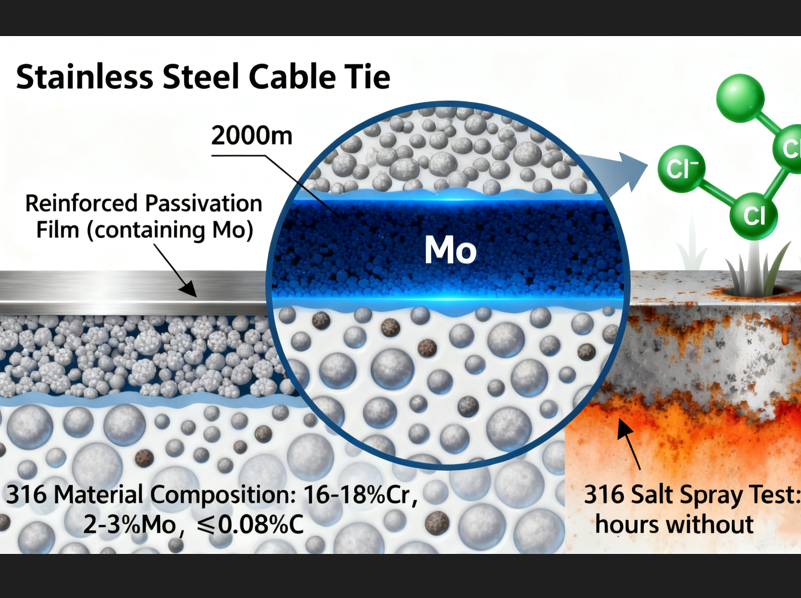
What really sets apart 304 from 316 stainless steel cable ties is what goes into making them. Both types have around 18% chromium plus somewhere between 8 and 10% nickel to handle basic rust issues, but there's something special about 316 steel. It adds another ingredient called molybdenum at about 2 to 3%. This makes all the difference when dealing with chlorides which show up everywhere from oceanside areas to roads treated with de-icing salts and even wastewater treatment plants. The molybdenum helps create a stronger protective layer on the metal surface that stops those pesky chloride ions from getting through. We know this because regular old 304 ties tend to start showing pits after exposure to saltwater or chemicals splash onto them. Tests done by third parties actually show that 316 can take about ten to fifteen times more chloride exposure before any pitting starts compared to standard 304 grade materials.
Salt Spray (ASTM B117) Data: Quantifying the Corrosion Resistance Gap
The ASTM B117 salt spray test clearly shows how much better 316 performs compared to other options. When looking at what happens in those accelerated marine tests, regular 304 stainless steel cable ties start showing rust anywhere between 96 to 144 hours later. Meanwhile, the 316 versions can last over 1,000 hours before any issues appear. The reason behind this massive difference? Molybdenum plays a big part in keeping that protective oxide layer stable on the surface. Anyone working with equipment in areas where chloride levels go above 500 ppm really needs to consider 316 stainless steel. Think about places like coastal construction sites, treatment facilities for wastewater, or even food production lines where salt exposure is constant. In these situations, going with 316 isn't merely a good idea it's absolutely necessary if we want to avoid having our cable ties fail prematurely.
Comparison of Key Properties
| Property | 304 Stainless Steel | 316 Stainless Steel |
|---|---|---|
| Molybdenum Content | None | 2–3% |
| Chloride Resistance | Moderate | High |
| Salt Spray Failure Point | 100–150 hours | 1,000+ hours |
| Ideal Use Case | Indoor/dry settings | Marine/chemical |
Selecting the Right Stainless Steel Cable Tie by Environment
Marine, Offshore, and Coastal Installations: When 316 Stainless Steel Cable Tie Is Mandatory
Marine environments, offshore platforms, and coastal areas face serious challenges from salt exposure that leads to extremely corrosive conditions. Chloride ions in seawater attack materials at an alarming rate, causing degradation problems across these installations. Regular 304 stainless steel cable ties tend to give way within just a few months because of pitting corrosion issues, which can lead to both equipment damage and potential safety risks. The 316 stainless steel alternative contains around 2 to 3 percent molybdenum added during manufacturing, making it much better at resisting corrosion while keeping its strength even when exposed to saltwater for long periods. According to field tests following ASTM B117 standards, systems equipped with 316 cable ties maintain over 95% functionality after ten years of salt spray exposure, whereas standard 304 versions typically start failing within just 18 months of installation. For this reason, many specifications now require the use of 316 grade fasteners on docks, oil drilling platforms, and other coastal structures where unexpected downtime costs operators approximately $50,000 each time corrosion causes system failures.
Chemical Processing & Wastewater: Avoiding Pitting and Crevice Corrosion
In chemical processing plants and wastewater treatment centers, stainless steel constantly faces harsh conditions including acids, strong bases, oxidizers, and sulfides. These environments create problems like pitting and crevice corrosion right at those tight connection points between components. The cheaper 304 grade alloy just isn't cut out for these situations. When pH levels drop below 3 or climb above 11, it starts developing cracks under stress, which can lead to serious leaks or complete failures. That's where 316 stainless steel cable ties really shine. With more nickel and molybdenum in their composition, they stand up better against those aggressive chemicals. Real world testing has shown that facilities using 316 ties experience failure rates of less than 2% per year in tough chemical environments compared to over 15% failures with standard 304 ties because they prevent those pesky crevice corrosion issues from starting. For industries like oil refining, water treatment, and drug manufacturing where operations must keep running smoothly and meet strict regulations, choosing the right materials makes all the difference in maintaining system integrity over time.
Ensuring Reliability: Certifications, Traceability, and Compliance for Stainless Steel Cable Ties
When choosing stainless steel cable ties for serious applications such as marine environments or chemical processing plants, it pays to check for proper certifications, traceable origins, and regulatory compliance. The main certification to look for is UL 62275 (which matches IEC 62275 standards). This basically means the product has passed tests showing good tensile strength, can handle temperatures up to 85 degrees Celsius, and maintains grip after being tested for 1,000 hours in cycles - all important factors when dealing with real world stresses on equipment. For traceability, always ask for mill test reports. These documents confirm whether the material is genuine 304 or 316 stainless steel alloy, something that matters a lot since fake products are still a problem in certain sectors, cutting down counterfeiting risks by around 40%. Also important are ISO 9001 quality management system compliance and CE marking for EU safety requirements. These ensure consistent quality and meet necessary regulations across different markets. Before making any purchase decisions, refer to this handy table comparing essential certifications.
| Certification | Purpose | Critical Tests |
|---|---|---|
| UL 62275 / IEC 62275 | Cable tie performance | Tensile strength, heat resistance, retention force |
| ISO 9001 | Quality management | Process consistency, documentation audits |
| CE Mark | EU safety compliance | Health, safety, environmental protection |
FAQ Section
Why is 316 stainless steel preferred for use in coastal and marine environments?
316 stainless steel is preferred for coastal and marine environments because of its high molybdenum content, which offers superior resistance against chloride-induced corrosion such as pitting and crevice corrosion.
How does molybdenum enhance corrosion resistance in stainless steel?
Molybdenum enhances corrosion resistance by working with chromium and nickel to form a stable oxide layer that prevents chloride ions from penetrating the metal surface and causing corrosion.
What certifications should I look for when purchasing stainless steel cable ties?
Look for certifications like UL 62275, ISO 9001, and CE Mark to ensure the cable ties meet tensile strength, quality management, and EU safety compliance standards.
Table of Contents
- Why Corrosion Resistance Is Critical for Stainless Steel Cable Ties
- 304 vs 316 Stainless Steel Cable Ties: Performance, Chemistry, and Use Cases
- Selecting the Right Stainless Steel Cable Tie by Environment
- Ensuring Reliability: Certifications, Traceability, and Compliance for Stainless Steel Cable Ties
- FAQ Section