EN
EN

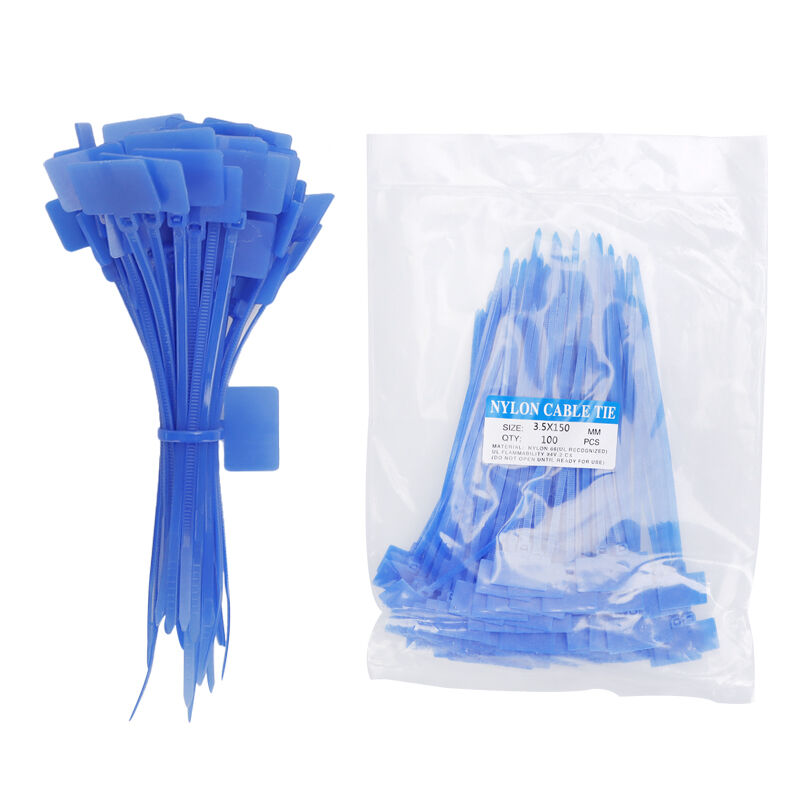
Material Selection: Matching Cable Tie Chemistry to Industrial Environments
Nylon 6/6 (Heat-Stabilized) vs. Stainless Steel 304/316 for Machinery Applications
The nylon 6/6 heat stabilized cable ties offer good value and work well inside machines like those CNC enclosures when temps stay below around 185 degrees Fahrenheit or 85 Celsius. But these ties won't last long if left in direct sunlight for too long or exposed to solvents, oils, or harsh acids. Stainless steel options such as grades 304 and 316 are much better at resisting corrosion and can handle pulls over 120 pounds, which makes them necessary equipment for places like offshore oil platforms, chemical factories, and car assembly lines where vibrations are constant. These metal ties can take heat all the way up to about 1000 degrees Fahrenheit or 538 Celsius and stand up against pretty aggressive chemicals too. The downside? They don't dampen vibrations naturally like nylon does, so sometimes engineers have to find other ways to manage that issue.
High-Performance Alternatives: ETFE, Acetal (POM), and UV-Resistant Nylon for Extreme Conditions
When standard materials fall short, engineered polymers meet mission-critical demands:
- ETFE (Ethylene Tetrafluoroethylene): Operates from −328°F to 302°F (−200°C to 150°C) and resists sulfuric acid, caustics, and plasma etchants—making it indispensable in semiconductor cleanrooms and aerospace avionics.
- Acetal (POM, Polyoxymethylene): Offers near-zero moisture absorption and tight dimensional stability, enabling metal-detection-safe use in food-grade and pharmaceutical machinery.
- UV-Resistant Nylon: Reinforced with carbon black additives, it retains ≥90% of original tensile strength after five years of continuous outdoor exposure—ideal for solar farms and telecom infrastructure.
Material selection must align precisely with thermal cycling profiles, chemical exposure pathways, and mechanical stress loads to prevent premature failure.
Mechanical Performance: Ensuring Cable Tie Integrity Under Vibration, Heat, and Load
Tensile Strength & Loop Tensile Strength (LTS) Requirements for CNC, Automotive, and Heavy Machinery
The loop tensile strength or LTS basically measures how much force is needed to snap a tightly secured tie. Standards bodies like UL and IEC have set guidelines for this metric at 62275. When looking at CNC machinery and car engine components, stainless steel cable ties typically handle between 100 to 300 kilograms of tension. Heavy duty nylon 6/6 variants can manage around 50 to 250 pounds before failing. Take hydraulic lines on big excavators as a practical case study these often need at least 200 pounds of holding power to withstand sudden impacts during operation. Nylon gets tricky when temperatures rise above about 85 degrees Celsius (that's 185 Fahrenheit) because its strength plummets rapidly. Stainless steel remains reliable even when heated to nearly 540 degrees Celsius (around 1000 Fahrenheit), making it the go to material for high temperature environments.
Vibration Damping and Thermal Cycling Resistance: Avoiding Fatigue Failure in Real-World Installations
The main reasons ties fail over time tend to be cyclic vibrations and thermal expansion problems, particularly noticeable in places like engine compartments, robotic workstations, and conveyor belt systems. Heat stabilized nylon stays pliable even when temperatures drop below freezing or climb above boiling point (-40 degrees Celsius to 115 C, which is roughly -40 F to 240 F). This helps prevent cracks from forming in the first place. When we run accelerated tests according to ASTM D638 standards, regular nylon typically breaks down after around 5,000 thermal cycles. But acetal or POM material can last well beyond 20,000 cycles instead. ETFE takes things one step further by soaking up about 30 percent more vibration energy compared to ordinary polymer ties. This makes all the difference for keeping abrasion at bay in those fast moving robotic arm assemblies where every little bit counts.
Mounting Compatibility: Selecting the Right Cable Tie Design for Machinery Integration
Screw-Mount, Mounting Ring, and Fir-Tree Cable Ties for Secure Panel and Frame Attachment
How something gets mounted really matters when it comes to staying put through all that industrial punishment. Take screw mount ties for instance they use those M4 to M8 threaded bolts to grip onto metal panels. These work great for things like CNC machine frames and control cabinets that get hit with pretty rough shocks day in and day out. Then there are mounting rings which let installers rotate them 180 degrees. This makes life much easier when running conduits around corners or grouping wires together inside tight spaces. Most electricians will tell you this rotation feature saves hours on complicated installations. For lighter duty jobs, fir tree mounts come into play. They have those little barbs sticking out from their stems that just push right into pre drilled holes in plastic boxes or composite panels. No tools needed at all which is why manufacturers love these for stuff like car control modules where every gram counts. Just slide them in place and call it good.
| Mount Type | Best For | Max Load Capacity | Temperature Range |
|---|---|---|---|
| Screw-Mount | Metal enclosures | 120 lbs | -40°C to 85°C |
| Mounting Ring | Conduit/frame routing | 75 lbs | -30°C to 105°C |
| Fir-Tree | Plastic/composite panels | 50 lbs | -20°C to 120°C |
Screw-mounts are strongly recommended for heavy machinery with sustained vibration. Fir-tree options excel where rapid assembly and low mass matter. Always match hole diameter to manufacturer specifications—undersized holes can reduce effective tensile strength by up to 40%.
Safety & Longevity: Preventing Insulation Damage and Ensuring Service Life
Getting cable ties right matters a lot for keeping wires safe and making sure systems last longer. When ties don't fit properly or start to break down over time, they can damage insulation which leaves conductors vulnerable to problems like water getting in, abrasion from vibrations, and stress from heat changes these are all things that lead to dangerous arc faults. According to what many technicians see in the field, about one third of early electrical failures in CNC machines come down to damaged insulation caused mechanically. The best option? Smooth edged nylon 6/6 ties that have passed UL 94 V-0 tests for flame resistance. These help protect wires from rubbing damage while still passing fire safety standards. For areas hotter than 90 degrees Celsius, special heat stabilized versions work better since regular nylon tends to lose most of its strength after just six months at those temperatures. Outside installations need UV protection too otherwise ties will crack when exposed to repeated temperature swings. In really important places like servo motor connections or battery management setups, adding silicone sleeves gives an extra layer of protection against wear from constant movement. During routine checks, look closely at how tight everything stays clamped together and check if any indentations go beyond 10% of the wire's thickness. Replacing ties every three to five years makes sense even if nothing looks wrong yet this helps avoid those compression issues that cause insulation failures later on. Doing so not only extends the life of wiring harnesses but also cuts down on potentially catastrophic arc flashes that could shut down operations completely.
FAQ
What is the main difference between Nylon 6/6 and Stainless Steel cable ties?
Nylon 6/6 ties are suitable for environments where vibration dampening and lower temperatures are important, while stainless steel ties are ideal for high-temperature and highly corrosive environments.
Which materials are ideal for extreme conditions in cable ties?
Materials like ETFE, Acetal (POM), and UV-Resistant Nylon are suitable for extreme conditions due to their heat, chemical resistance, and UV endurance.
How often should cable ties be replaced?
Cable ties should typically be replaced every three to five years to avoid compression issues that lead to insulation failures.
Table of Contents
- Material Selection: Matching Cable Tie Chemistry to Industrial Environments
- Mechanical Performance: Ensuring Cable Tie Integrity Under Vibration, Heat, and Load
- Mounting Compatibility: Selecting the Right Cable Tie Design for Machinery Integration
- Safety & Longevity: Preventing Insulation Damage and Ensuring Service Life
- FAQ